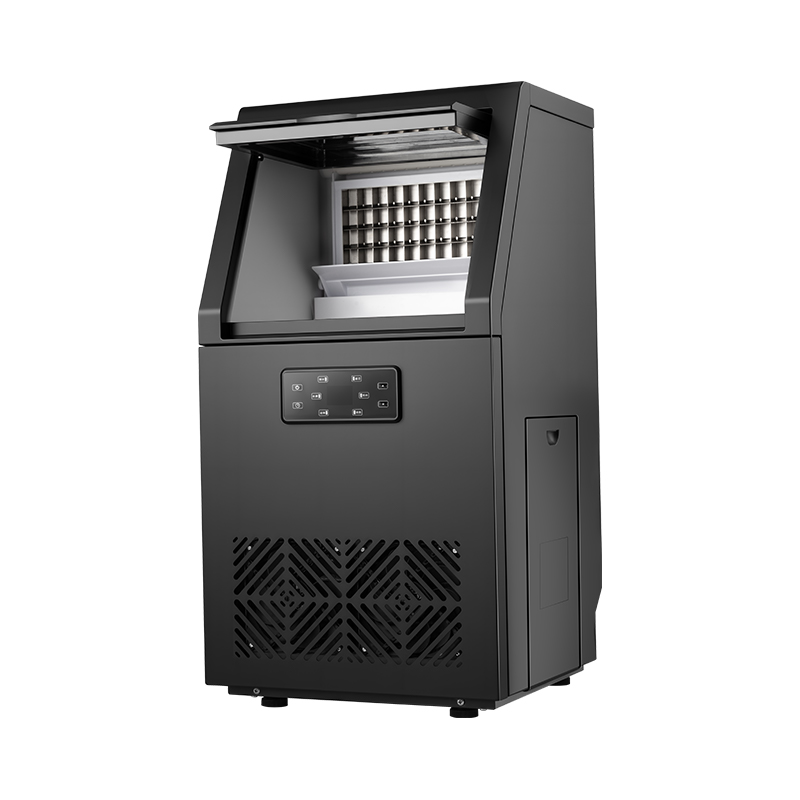
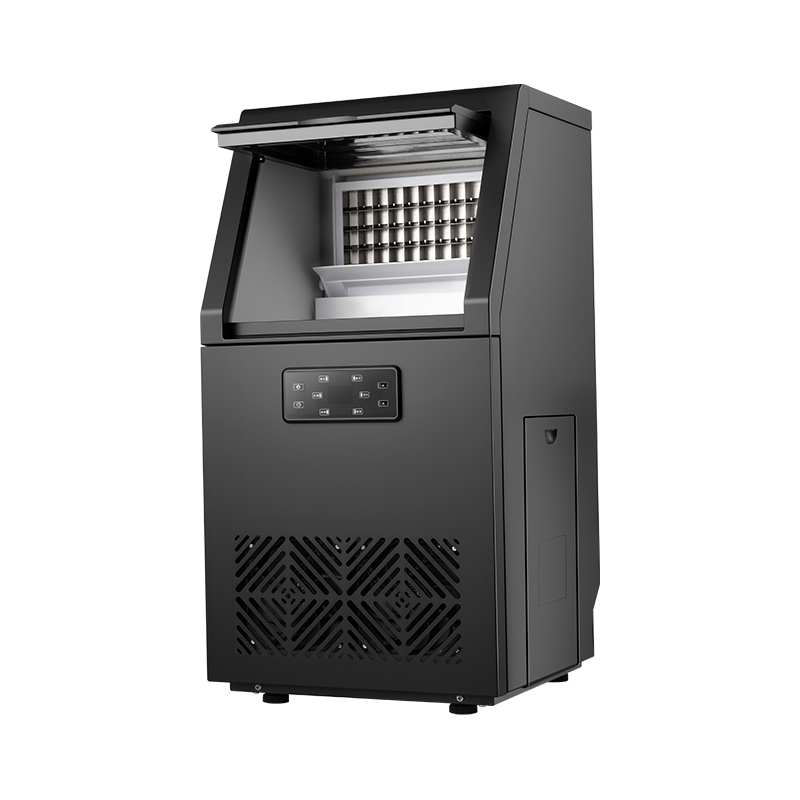
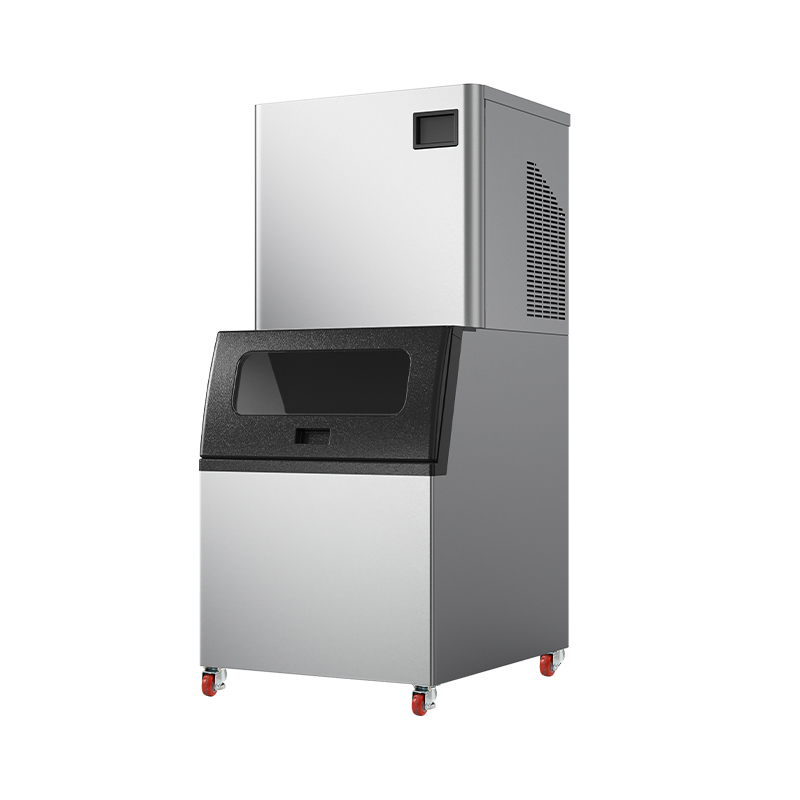
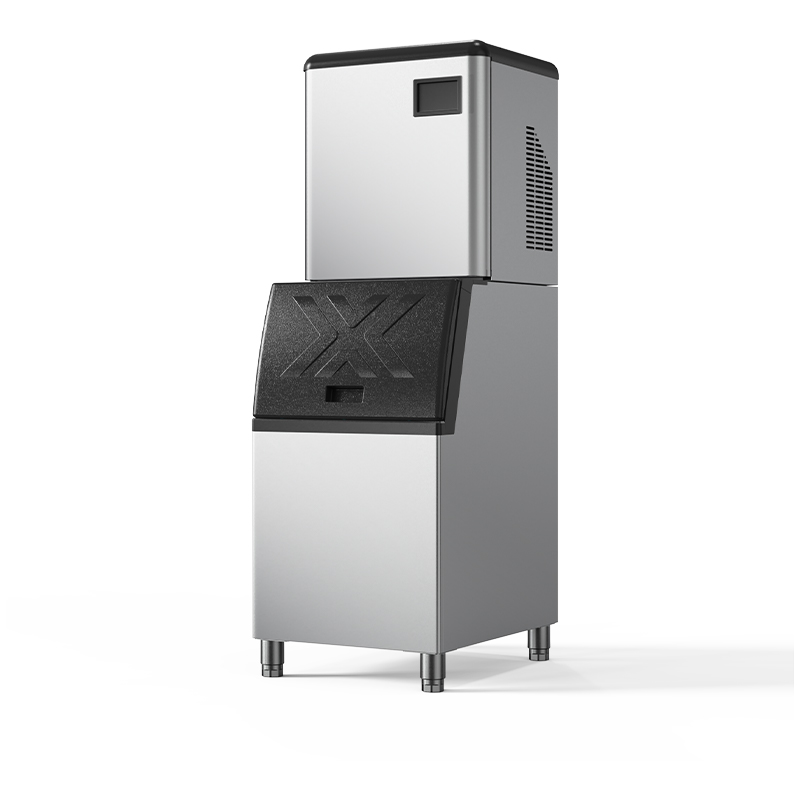
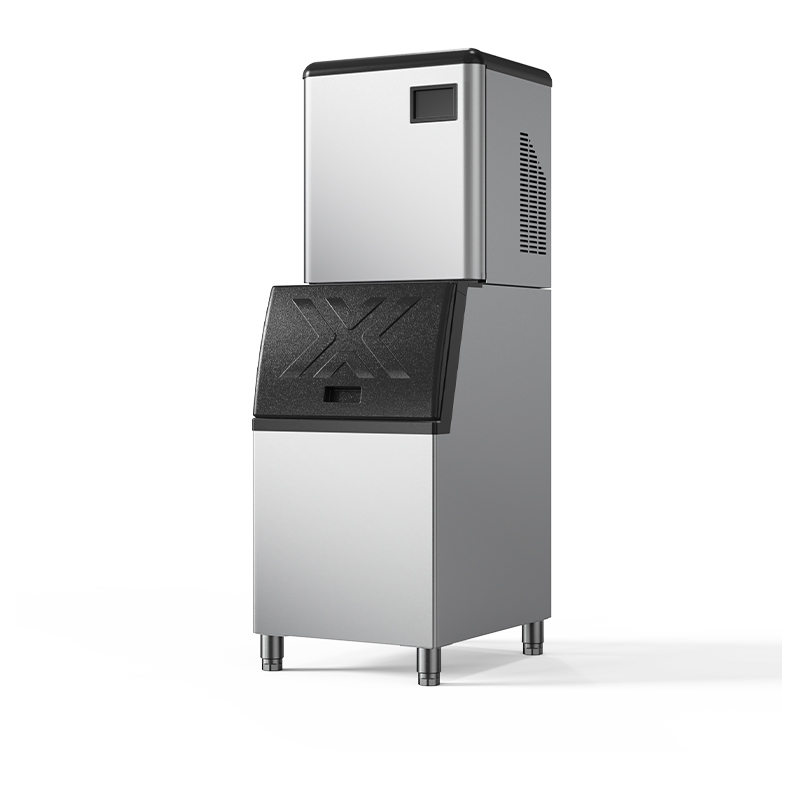
The SMK-24F Full-Cube Undercounter Ice Maker is a fully automated ice-making unit meticulously desig...
+ VIEW MORESharmoon appreciates your support and sincerely looks forward to cooperating with you for mutual development!

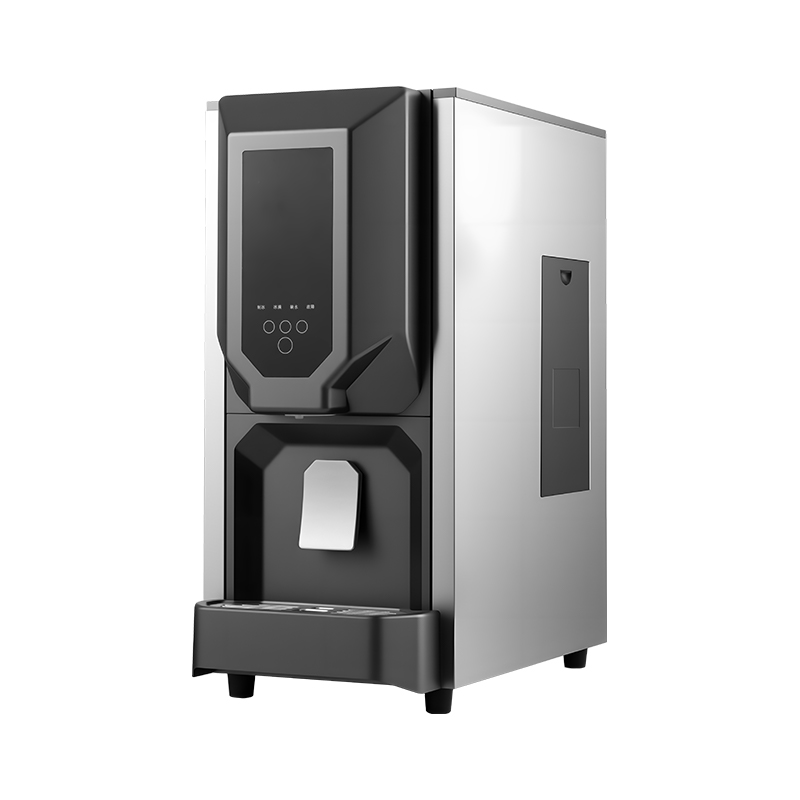
A flake ice maker with an integrated chilled water system is a dual-function appliance that produces fine, granular flake ice and supplies a continuous stream of cold water from a single compact unit. Unlike conventional ice machines that only make ice, this all-in-one design combines an independent ice-making circuit, an insulated ice storage compartment, and a chilled water delivery system within one countertop-footprint machine — eliminating the need for a separate water chiller and reducing the equipment space required at a busy bar station or service counter. The ice it produces is small, rounded, and crystal-clear: soft enough to blend seamlessly into beverages, fast enough to chill a drink in seconds, and visually clean enough to elevate the presentation of premium coffee, cocktails, and cold infusions.
This type of flake ice maker has found a particularly loyal following in specialty coffee shops, high-end cocktail bars, hotel lounges, private clubs, and food-and-beverage venues where both ice quality and operational efficiency are non-negotiable. If you are evaluating whether this machine is the right fit for your operation — or trying to understand exactly what sets it apart from a standard ice maker — this guide covers the full picture: how the machine works, what makes its ice distinctive, where it delivers the most value, what to look for in specifications, and how to keep it running at peak performance.
The defining feature of this flake ice maker is not just the ice it produces — it is the integration of two independent functional systems in a single machine. Most ice makers serve one purpose: they make ice. This design goes further by incorporating a parallel chilled water supply circuit that draws from the same refrigeration system, delivering cold water on demand through a dedicated outlet while the ice-making process continues uninterrupted.
The two circuits — ice production and cold water supply — operate independently under intelligent valve-group control. This means pulling cold water from the machine does not pause or degrade ice production, and a full ice bin does not affect the availability of chilled water. The two functions are coordinated by a built-in microcomputer that manages system priority, protection logic, and automatic restart sequences without requiring operator intervention.
For a specialty coffee bar or cocktail station, this eliminates two pieces of equipment — the ice maker and the water chiller — and replaces them with one countertop unit that occupies a fraction of the combined space. In venues where every inch of bar space is contested, this integration is not merely convenient; it is a meaningful operational advantage.
The ice produced by this machine is technically classified as granular flake ice — sometimes also called pellet ice, pebble ice, or in Japanese-influenced café culture, "snow ice." It is formed through a spiral-cut extrusion mechanism rather than a flat-drum scraping process, which results in small, rounded, slightly irregular ice particles that are denser than traditional flat flake ice but softer and more porous than a solid cube. Some models are capable of producing ice at temperatures as low as -8°C, resulting in harder, drier granules with an extended chilling window before melt.
The practical properties of granular flake ice that make it so well-suited to beverage service are a direct consequence of its geometry and texture:
The defrost drain function incorporated in the production cycle plays a specific hygienic role: it flushes residual water from the ice path after each defrost event, ensuring that the ice entering the storage bin is clean, free of meltwater accumulation, and consistently dry. This detail matters in high-standard beverage environments where ice quality is directly associated with drink quality.
The dual ice-and-water functionality of this machine makes it particularly well suited to environments where both resources are consumed continuously, space is limited, and service quality standards are high. The following applications represent the core use cases where this flake ice maker consistently demonstrates its value.
This is the primary and most natural application environment for the dual-function flake ice maker. The specialty coffee and tea sector has driven strong demand for granular flake ice because its small, rounded form integrates seamlessly with cold beverages — iced Americanos, cold brew coffees, fruit teas, sparkling water drinks, and seasonal latte series — without the chunky visual disruption of cube ice or the overly fast dilution of crushed ice. Baristas value the ice's visual clarity in transparent cups and its ability to chill a drink rapidly without altering its flavor profile in the first minutes of service.
The integrated cold water outlet serves a parallel function: providing immediately chilled water for drink preparation, equipment rinsing, and the general water needs of a busy café bar without requiring a separate water chiller plumbed into the counter. In a compact coffee bar where counter space is at an absolute premium, this combination in one machine can replace two appliances that would otherwise compete for the same footprint.
In cocktail preparation, the speed at which ice chills a drink during the shaking or stirring stage matters. Granular flake ice's high surface area and sub-zero temperature allow it to absorb heat from the cocktail rapidly, locking in the drink's aromatic compounds before significant dilution occurs. This is particularly relevant in drinks where temperature and aroma are tightly linked — whiskey highballs, gin and tonic compositions, and citrus-forward cocktails. The chilled water outlet provides an immediately accessible cold water source for cocktail mixing water, ice bath use, and bar cleaning without the need for a separate chilled water line.
In executive lounges and private club environments, the machine's low operating noise is a specific selection criterion. These environments are designed for relaxed social interaction and quiet enjoyment, and a loud ice machine in the service area disrupts the ambient atmosphere. The optimized compressor mounting and insulated enclosure design in well-engineered units specifically addresses this requirement.
Upscale hotels place individual or small-group flake ice makers on guestroom floors, in suite pantry areas, and in hospitality service alcoves to provide guests with immediate access to quality ice and chilled water without requiring a trip to a centralized ice machine on another floor. The all-in-one machine's compact countertop footprint makes it viable in service alcoves and pantry spaces that could not accommodate a full-size ice machine and a separate water dispenser. The automatic operation and protection features — auto-shutoff when the bin is full, auto-restart when ice is removed — mean it functions reliably without continuous staff monitoring.
In high-traffic convenience retail environments, demand for iced beverages and cold water is consistent and volume-driven. The flake ice maker's simple one-touch operation, automatic restart after auto-shutoff, and robust construction for high-frequency use make it well-suited to these environments. Staff can replenish beverages and serve customers quickly without managing ice separately, and the integrated cold water function supports both beverage preparation and the general hydration needs of customers and staff. The machine's straightforward maintenance requirements also reduce the training burden in environments with higher staff turnover.
In clinical laboratories, pharmacy cold rooms, and patient care environments, granular flake ice serves a range of temperature-sensitive applications: maintaining specimen cooling during transport and processing, supporting ice bath temperature control for reagent preparation, preserving vaccine cold chain integrity at point-of-use, and providing biological sample refrigeration at nursing stations. The hygienic construction — stainless steel evaporator tubes and all water-contact components — meets food safety and medical facility cleanliness standards. The float-valve water inlet system in some models, which prevents water stagnation in the supply line, specifically addresses the biofilm and bacterial growth risk that is a hygiene concern in clinical environments.
Granular flake ice's ability to penetrate narrow gaps and conform to irregular surfaces makes it effective for the chilled display of fresh foods — seafood, shellfish, sliced meats, sushi, and fresh produce — in restaurant display cases, buffet presentations, and food market counters. The fine granules fill spaces between items that larger ice forms cannot reach, providing more even surface-contact cooling and extending the display window before the product needs to be rotated or refreshed.
Understanding the technology inside a flake ice maker helps buyers evaluate competing products beyond surface-level specification comparisons. The following features represent the key technological design decisions that separate well-engineered units from lower-quality alternatives.
The granular ice produced by this machine type is formed through a spiral-cut extrusion mechanism — a rotating helical cutter that simultaneously scrapes ice from a chilled evaporator surface and shapes it into small, rounded particles. This is distinct from the flat-drum scraping process used in large-scale industrial flake ice machines, and distinct from the simple mold-fill-and-harvest process used in cube ice makers. The result is ice with a more uniform, rounder particle geometry than raw flaked ice, with a slightly higher density that gives it better structural integrity in a glass — it does not immediately compact into a solid mass at the bottom.
Ice release from the evaporator is achieved through a hot-gas defrost cycle — a brief pulse of warm refrigerant through the evaporator that separates the ice from the metal surface without using water or mechanical force. This method is faster and more energy-efficient than water-warm defrost, and it produces cleaner ice because it does not introduce warm water into the ice path. The subsequent defrost drain function removes residual water from the discharge path before the next production cycle begins, ensuring the ice entering the bin is consistently dry and clear.
The machine's control logic is managed by a built-in microcomputer that continuously monitors system status and manages automated responses to all standard operational events. Protection functions include:
This level of automated operation means the machine runs effectively with minimal staff supervision — a significant operational benefit in high-throughput beverage environments where staff attention is directed toward customer service rather than equipment monitoring.
Some models incorporate a float-valve controlled water inlet system that maintains a consistent water level in the supply reservoir at all times, precisely balancing inflow with consumption. This prevents the water stagnation that can occur in machines with intermittent solenoid-valve filling, where water sits in the supply line or reservoir between fill cycles. Standing water in a warm environment is a known precondition for bacterial biofilm formation. The float-valve design effectively eliminates this risk by keeping fresh water continuously flowing through the system during operation.
The evaporator tubes and all components in direct contact with water or ice are constructed from stainless steel or certified food-grade materials. This is a non-negotiable requirement for any ice machine producing ice intended for human consumption, and it is particularly important in healthcare and food service applications where regulatory compliance is a formal requirement. High-quality units also incorporate a filtration screen over the compressor cooling inlet to prevent dust and debris accumulation on the compressor cooling fins — a common cause of compressor overheating and premature failure in less carefully designed machines.
The machine uses an internationally recognized compressor brand and an environmentally compliant refrigerant. The combination of an optimized heat rejection circuit and well-engineered insulation in the ice storage compartment reduces both energy consumption during production cycles and passive heat gain into the stored ice during idle periods. The low-noise design — achieved through vibration-dampened compressor mounting and acoustic insulation in the cabinet — specifically benefits installations in quiet, customer-facing environments.
For buyers deciding between a standard ice-only flake machine and the dual-function all-in-one design, the following comparison table outlines the key operational differences.
| Feature | All-in-One Flake Ice Maker (Ice + Cold Water) | Standard Ice-Only Machine |
|---|---|---|
| Output functions | Granular flake ice + continuous chilled water | Ice only |
| Equipment footprint | Single countertop unit | Ice maker + separate water chiller required |
| Ice type | Granular / pellet flake (small, rounded, clear) | Varies by machine type (cube, flake, nugget) |
| Best application | Beverages, bar service, café, healthcare, hospitality | Broader; may include high-volume production or display |
| Cold water availability | On-demand, continuous | Not available without separate equipment |
| Space efficiency | High — replaces two appliances | Moderate — one appliance, one function |
| Operation complexity | Fully automatic with intelligent dual-circuit control | Automatic ice production only |
| Noise level consideration | Low-noise design for customer-facing environments | Varies; industrial models typically louder |
Comparing models within this category requires assessing the following technical parameters. These specifications collectively determine whether a machine can consistently meet your operational ice and cold water demand.
Rated daily production is expressed as kilograms per 24 hours, measured under standard conditions (typically 21°C ambient / 15°C inlet water). Real-world output in warmer environments will be somewhat lower. For a busy specialty café or cocktail bar, a machine rated at 30 to 80 kg/day is typical. For a hotel floor service point or convenience store, a range of 50 to 150 kg/day may be more appropriate depending on traffic volume. Always size to your peak day demand, not your average, and apply a 20 to 25% buffer margin above peak to account for ambient temperature variation and machine aging.
The storage bin capacity determines the reserve volume of ice available during demand peaks before the machine has time to replenish supply. In continuously busy environments — morning rush in a coffee shop, cocktail hour in a bar — a bin that holds at least 30 to 50% of daily rated production provides an adequate buffer. Larger bins add to the machine's overall footprint and weight, so balance storage needs against the space available.
Standard models discharge ice at approximately -5°C to -7°C. Premium models capable of producing ice at -8°C or below deliver harder, drier granules that take longer to melt in a glass — a meaningful quality advantage in venues where customers hold beverages for extended periods. For applications requiring the ice to maintain a chilled food display for more than 30 minutes, lower discharge temperature adds visible value.
The chilled water delivery rate and temperature are critical for high-demand preparation environments. Confirm the flow rate in liters per minute and the target outlet water temperature under load — some machines maintain cold water at a consistent 4°C to 8°C, while others may only reach 10°C or above during peak simultaneous ice production and water draw. For venues where the cold water outlet is used for high-volume drink preparation, water temperature consistency is as important as the ice output itself.
For installations in customer-facing areas, private lounges, hotel floors, or medical facilities, noise level matters. Specify machines with a stated operating noise level and compare this against the acceptable ambient noise threshold of the installation environment. Well-designed units in this category typically operate at 45 to 55 dB(A), comparable to a quiet conversation. Machines without vibration isolation or acoustic cabinet treatment can reach 60 dB(A) or above, which becomes noticeable in quiet environments.
Confirm that the machine uses an environmentally compliant, low-GWP refrigerant appropriate for your target market — R290 (propane), R448A, R449A, or equivalent. In EU markets, verify compliance with current F-gas regulation phase-down requirements. For operators with sustainability commitments or green certification targets, selecting a machine with a compliant refrigerant and a favorable energy efficiency rating supports those objectives.
All water- and ice-contact surfaces should be stainless steel 304 or food-grade certified polymer. Relevant certifications depending on your market include NSF/ANSI 12 (North America food equipment safety), CE marking (EU), and UL listing (North American electrical safety). For healthcare applications, ask specifically about antimicrobial material treatments and sealed water circuit design.
Buyers consistently cite the following five advantages as the primary drivers behind choosing a dual-function flake ice maker over alternative ice equipment solutions.
The all-in-one flake ice maker is designed for plug-and-play installation with minimal site preparation, but a few conditions must be met to ensure it operates at rated performance from day one.
Consistent cleaning and maintenance are the most important factors in sustaining ice quality, machine output, and operational longevity. For a machine used in food and beverage service, regular cleaning is also a food safety requirement — not merely a recommendation.
The dual-function flake ice maker — producing granular pellet ice and supplying chilled water from a single countertop unit — is the right choice when three conditions are true simultaneously: you need a consistent supply of high-quality ice for beverage service or food cooling, you need access to chilled water for preparation or service, and you are operating in an environment where space, noise, and presentation standards are all meaningful constraints.
Specialty coffee shops, craft cocktail bars, hotel service points, private clubs, and medical facilities consistently find that this machine replaces two pieces of equipment without any functional compromise, reduces staff management overhead through fully automatic operation, and delivers ice quality that visibly improves the beverage or service it supports. For venues that compete on quality and experience, the ice is not a commodity — it is part of the product.
When evaluating models, prioritize daily production capacity sized to your peak demand with a 20 to 25% buffer, verify ice discharge temperature for your specific use case, confirm cold water outlet temperature and flow rate under simultaneous load, assess noise level for your installation environment, and confirm hygienic construction standards with food-grade certifications. A well-matched, properly maintained machine in this category should deliver consistent, reliable performance for its full service life — supporting every beverage and service interaction it is part of.
The SMK-24F Full-Cube Undercounter Ice Maker is a fully automated ice-making unit meticulously desig...
+ VIEW MORE
The SMK-32F Smart Integrated Commercial Ice Maker is a highly efficient ice-making device specifical...
+ VIEW MORE
The SMK-260 FRO High-Yield Cube Ice Maker is a split-system ice machine specifically engineered for ...
+ VIEW MORE
The SMK-182 FRO Stainless Steel Cube Ice Maker is a split-system square ice maker specifically engin...
+ VIEW MORE
SMK-156 for High-Capacity Cube Ice Maker— A Commercial Flagship and Production Powerhouse
+ VIEW MORE
SMK-EA 50 FRO Dual-Core Indoor Nugget Ice Maker— The Barista's Ally, A Powerhouse of Efficiency
+ VIEW MORESend us your requirements and we will reply within 24 hours.

Product Categories
Cube Ice Maker Flake Ice Maker Extruded Pellet Ice Maker Split Type Cube Ice Maker Snowflake Ice MakerContact
[email protected]
+ 86 - 18158466171
No. 6 Wei'er Road, Xigong District, Xinpu Town, Cixi City, Zhejiang Province, China
English
Español