Industry News Industry News
Home / News & Share / Industry News / How to Use a Cube Ice Maker: Setup, Operation & Cleaning Guide

How to Use a Cube Ice Maker: Setup, Operation & Cleaning Guide


Sharmoon appreciates your support and sincerely looks forward to cooperating with you for mutual development!

Using a cube ice maker is straightforward: fill the water reservoir, power on the unit, select your preferred cube size if the model allows, and wait for the first batch — most countertop machines produce ice within 6 to 15 minutes. However, getting the most out of your cube ice maker over the long term requires a deeper understanding of how the machine operates, how to use it correctly under different conditions, and how to maintain it so that it continues delivering clean, fresh ice efficiently. Whether you are using a compact countertop model at home, a built-in undercounter unit in a restaurant bar, or a high-capacity commercial cube ice maker in a hotel kitchen, the core principles are the same. This guide covers every stage in detail — from unboxing and first-time setup, to daily operation best practices, cleaning procedures, troubleshooting, seasonal storage, and how to choose the right cube size for your specific application.

Ice quality matters more than many users initially realize. Cloudy, hollow, or fast-melting cubes are often symptoms of operational or maintenance issues rather than product defects. By following the practices outlined in this guide, you can ensure consistent cube quality, extend the working life of your machine, and avoid the most common causes of reduced output or unexpected shutdowns.

What Is a Cube Ice Maker and How Does It Work?

A cube ice maker is a refrigeration appliance — available in countertop, undercounter, and commercial freestanding formats — that freezes water in a structured mold to produce solid, uniform ice cubes. Unlike the ice tray sitting in a household freezer, a dedicated cube ice maker runs an active refrigeration cycle that chills water over metal evaporator fingers or inside a formed grid cavity, producing cubes significantly faster and in much larger quantities than passive freezing allows.

The production process follows a repeating four-stage cycle. First, water is drawn from the reservoir by a pump and circulated over or into the chilled evaporator surface. Second, the water freezes progressively — layer by layer or in a single fill, depending on machine design — forming solid cubes within the mold. Third, a harvest cycle is triggered: a brief warm pulse or mechanical release detaches the finished cubes from the evaporator. Fourth, the cubes fall into the storage bin below, where a bin-full sensor monitors capacity. When the bin sensor detects that the storage area is full, the machine pauses automatically and resumes production as ice is removed and space becomes available.

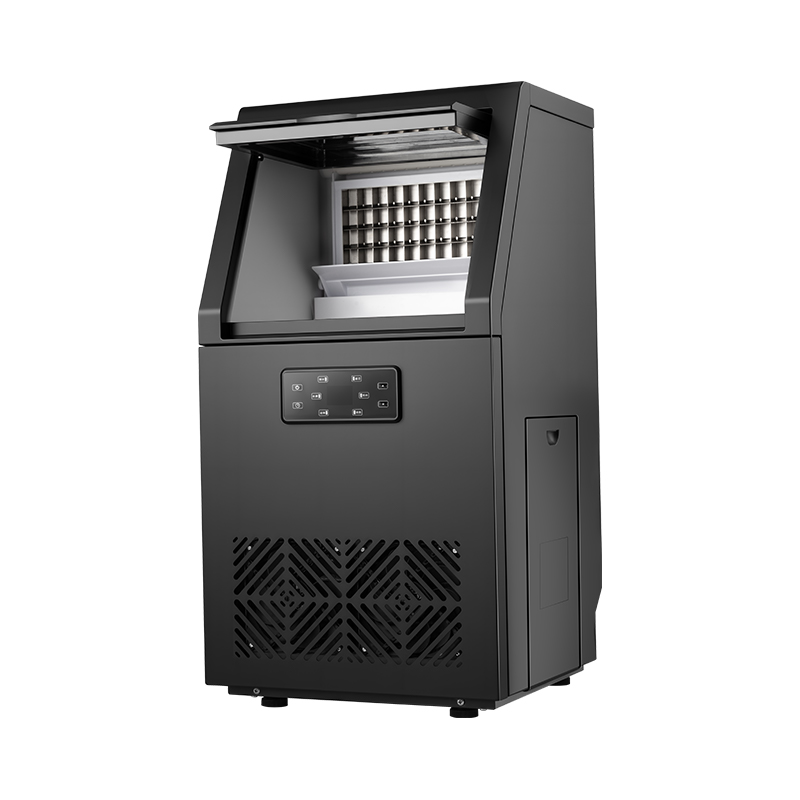
The construction of the evaporator is a key differentiator between cube ice maker types. Grid-style evaporators freeze water poured over a metal grid into individual cube compartments — common in countertop and light-commercial models. Finger evaporator designs, more common in mid-to-large commercial machines, grow ice onto vertical metal fingers and harvest it by briefly warming the fingers so the cubes slide off cleanly. Each design has different implications for cube clarity, density, size consistency, and cleaning requirements.

Understanding the refrigeration cycle also explains why operational habits — such as using filtered water, maintaining adequate ventilation, and cleaning the evaporator on schedule — have a direct and measurable impact on both cube quality and machine output rate. A clogged air vent forces the compressor to run hotter; mineral scale on the evaporator slows the freezing process; stale water in the reservoir introduces off-tastes into the ice. Each of these is preventable with routine care.

Setting Up Your Cube Ice Maker for the First Time

Proper first-time setup establishes the conditions for efficient operation from day one. Skipping even a single step can result in off-tasting ice, slower-than-expected production, or avoidable wear on internal components. The following steps apply to the majority of countertop and portable cube ice maker models; commercial undercounter units with direct water line connections may have additional plumbing and leveling requirements covered in their specific installation manuals.

  1. Choose the right location. Place the unit on a flat, stable, heat-resistant surface with at least 5 to 6 inches of clearance on all sides and at the back for ventilation. Keep the machine away from direct sunlight, ovens, dishwashers, and other heat-generating appliances, all of which force the compressor to work harder and reduce ice output. Avoid placing the unit on carpeted surfaces that can block the bottom air intake present on some models.
  2. Inspect the unit before use. Remove all packaging materials, including any protective film on the interior surfaces. Check for any visible damage to the reservoir, bin, or evaporator area that may have occurred during shipping. If damage is found, contact the supplier before operating the machine.
  3. Rinse the water reservoir and ice bin. Before the first use, wipe the interior reservoir and the ice bin with a clean damp cloth. Some manufacturers recommend running one full ice-making cycle and discarding the first batch to flush out any residual manufacturing odors or assembly residues from the water circuit.
  4. Fill with clean, filtered water. Use cold, potable water. Filtered water is strongly preferred because it reduces mineral content, slows scale buildup on the evaporator, and results in clearer, better-tasting ice. Avoid using distilled water in machines that rely on a mineral-based electrical conductivity sensor for water-level detection, as the near-zero mineral content can interfere with the sensor. Never fill above the MAX line marked on the reservoir.
  5. Allow the unit to stabilize after moving. If the machine was transported on its side or at a steep angle, allow it to stand upright for at least 30 minutes before powering it on. This allows compressor refrigerant oil that may have migrated into the refrigerant lines to drain back to its correct position, preventing compressor damage on startup.
  6. Connect to a dedicated power outlet. Plug the machine into a grounded outlet that meets the voltage and current requirements listed on the product rating label. Avoid sharing the outlet with high-draw appliances such as microwaves, blenders, or refrigerators, as voltage fluctuations can affect compressor performance.
  7. Power on and select cube size. Many models offer small, medium, and large cube size options selectable from the control panel. Choose your preferred size, then press the start or power button. The compressor and water pump should activate within a few seconds. The first batch is typically ready in 8 to 15 minutes depending on the model and ambient temperature.

During initial operation, it is normal to hear the water pump circulating, the compressor cycling on and off, and the distinct sound of cubes dropping into the bin at the end of each harvest. If the machine remains silent after powering on, check that it is correctly plugged in, that the water reservoir has enough water, and that no error indicator light is active on the control panel.

Daily Operation: Getting the Most Out of Every Cycle

Once the machine is set up and running, day-to-day operation is largely automatic. However, a few consistent habits will significantly improve ice quality, machine output, and long-term reliability.

Keep the Water Reservoir Adequately Filled

Most portable and countertop cube ice makers rely on manual reservoir refilling rather than a direct plumbing connection. The machine will illuminate a low-water indicator light when the reservoir drops below the minimum operating level and will pause production to protect the pump. Running the water pump dry — even briefly — can cause accelerated wear on the pump impeller and seal. Make it a habit to check the reservoir level each time you remove ice from the bin, and top it up proactively rather than waiting for the indicator.

For undercounter commercial units connected directly to a water supply line, the reservoir management concern is replaced by filter maintenance: ensure the inline water filter is replaced at the manufacturer-recommended interval (typically every six months or after a specified volume of water) to maintain consistent water quality reaching the evaporator.

Remove Ice Regularly to Maintain Continuous Production

When the storage bin fills up, the bin-full sensor triggers an automatic production pause. Ice remaining in the bin will gradually melt, and the meltwater drains back into the reservoir to be re-frozen in the next cycle — this closed-loop recycling is by design and not a fault. However, if ice sits in the bin for extended periods in a warm environment, it can partially melt and refreeze into clumped masses that are difficult to separate and may block the drain pathway. Transfer excess ice to an insulated container or a secondary freezer to preserve cube integrity and keep the production cycle running continuously.

Monitor Ambient Temperature for Optimal Output

Cube ice makers are engineered to operate efficiently within a defined ambient temperature range — typically 50°F to 90°F (10°C to 32°C) for most residential and light-commercial models. Operating outside this range degrades performance in predictable ways. In environments above 90°F, the condenser struggles to reject heat effectively, causing the compressor to run in longer cycles, ice production per hour to drop noticeably, and the machine to run hotter than intended. In very cold environments below 50°F — such as unheated garages during winter — the harvest cycle may not complete correctly because the warm pulse used to release cubes from the evaporator is calibrated for warmer ambient conditions.

If your installation environment runs warm, consider improving room ventilation, adding a small fan to improve air circulation around the machine, or relocating it to a cooler area. These simple changes can meaningfully restore output to rated capacity.

Change the Water Regularly Even When Not Fully Depleted

Water that sits in the reservoir for more than 24 hours — particularly in warmer environments — can develop bacterial growth or absorb ambient odors that transfer into the ice. If you are not consuming ice rapidly enough to cycle through the reservoir water within a day, drain the reservoir, wipe it clean, and refill with fresh water. This is especially important in commercial settings where consistent ice hygiene is a food safety requirement.

Cube Ice Size Guide: Choosing the Right Size for Your Application

Not all cube ice is equal, and the size of the cube has a direct impact on its performance in any given application. Cube dimensions affect how quickly the ice melts, how effectively it chills a beverage, how well it stacks in a glass or cooler, and how suitable it is for blending or mechanical processing. Most cube ice makers offer two or three size options; understanding the trade-offs helps you select the right setting for your primary use case.

Cube Size Approximate Dimensions Melt Rate Best Applications
Small ~0.75 inch / ~19 mm Fast Blended drinks, rapid chilling, ice packs, soft drinks
Medium ~1.0 inch / ~25 mm Moderate General beverages, cocktails, water glasses, catering
Large / Full Cube ~1.25 inch / ~32 mm Slow Premium spirits, whiskey service, food display, coolers
Common cube ice sizes and their recommended use cases

For commercial food service settings such as hotel bars, restaurant beverage stations, or catering operations, full cube or large cube ice is generally the preferred standard. The greater mass means the cube melts more slowly, dilutes the beverage less before it is consumed, and presents more attractively in glassware — all of which matter in a hospitality context. Many beverage service professionals specifically request full cube ice for whiskey, bourbon, gin-based cocktails, and iced coffee drinks where minimizing dilution over the service period is a priority.

For blended drink applications — smoothies, frozen cocktails, protein shakes — small cubes are more practical. They require less force from the blender motor to break down, reducing wear on the blending equipment and producing a more uniform blend texture. Small cubes are also well-suited for filling ice packs or portable coolers where rapid initial chilling is more important than extended melt time.

It is worth noting that machines producing smaller cubes typically complete each production cycle faster, as less freezing time is required per cube. If high-volume output is a priority — for example, during a catering event — selecting the smaller cube setting can increase the number of cycles per hour and total ice yield, even though each individual cube is lighter.

How to Clean a Cube Ice Maker: Step-by-Step Instructions

Regular cleaning is the single most critical maintenance task for any cube ice maker. Over time, mineral deposits from tap water accumulate on the evaporator surface and inside the water lines, reducing heat transfer efficiency and output. Simultaneously, the warm, moist interior environment of the machine is hospitable to mold, mildew, and bacterial biofilm growth — all of which can contaminate ice and create food safety hazards.

The standard recommended cleaning frequency is every one to three months for residential units. Commercial machines in active daily use — hotels, restaurants, cafés, event venues — should be cleaned on a monthly schedule, with additional cleaning triggered any time the ice develops an unusual taste, odor, or appearance. Some commercial units include an automated cleaning reminder based on operating hours.

Full Cleaning Procedure

  1. Power off and fully empty the machine. Switch the machine off using the power button and disconnect from the outlet. Remove all ice from the storage bin and discard it. Drain any remaining water from the reservoir using the drain plug or drain hose if present, or tilt the unit gently to empty.
  2. Remove and hand-wash all removable components. Take out the ice storage bin, water basket, and any other removable parts. Wash these thoroughly with warm water and a small amount of mild, unscented dish soap. Rinse completely to remove any soap residue, then set aside to air dry.
  3. Prepare the descaling and sanitizing solution. Fill the reservoir with a food-safe ice machine cleaner diluted according to product instructions, or use a natural alternative: a solution of one part white vinegar to ten parts clean water works effectively for light-to-moderate mineral scale. For sanitizing (killing bacteria and mold), a separate food-safe sanitizing solution — or a very dilute mixture of unscented household bleach and water as specified in the machine's manual — may be used after the descaling step.
  4. Run the dedicated cleaning cycle. Many modern cube ice makers include a "Clean" or "Self-Clean" mode accessible via the control panel. Activate this mode and allow the machine to circulate the cleaning solution through the internal water circuit and over the evaporator surface for the full duration specified — typically 20 to 30 minutes. If no cleaning mode is available, power on the machine in normal ice-making mode and allow it to run through two or three complete cycles with the cleaning solution in the reservoir.
  5. Manually clean the evaporator and interior surfaces. Using a soft cloth or non-abrasive sponge dampened with the cleaning solution, gently wipe the evaporator fingers or grid, the interior walls of the machine, and the water distribution tray. Do not use metal brushes, steel wool, or abrasive pads, which can scratch surfaces and create sites for future bacterial adhesion.
  6. Drain completely and perform a water rinse cycle. Drain the cleaning solution from the reservoir entirely. Refill with fresh, clean water and run the machine through at least one full normal operating cycle — discarding the produced ice — to flush residual cleaner from the water circuit and evaporator. Repeat the rinse cycle a second time if any cleaning solution odor remains detectable.
  7. Clean the exterior and ventilation areas. Wipe down the outer surfaces of the machine with a damp cloth. Use a soft brush or vacuum cleaner with a brush attachment to carefully clean the air intake grilles and exhaust vents, removing accumulated dust and lint. This step is often overlooked but directly affects cooling efficiency — restricted airflow is a leading cause of reduced output in otherwise healthy machines.
  8. Reassemble, refill, and run a validation batch. Reinstall all cleaned components, refill the reservoir with fresh filtered water, and power the machine back on. Produce one complete batch of ice and discard it as a final safety flush before returning to normal use.

If white or grayish scale deposits are visible on the evaporator after cleaning, or if the machine's output per cycle has noticeably declined, this indicates that mineral buildup is more advanced and a stronger descaling treatment or increased cleaning frequency is warranted. Consistent use of filtered water remains the most effective preventive measure against scale accumulation.

Troubleshooting Common Cube Ice Maker Problems

Even a well-maintained machine will occasionally produce unexpected results or behave differently than normal. Most issues are attributable to one of a small number of root causes — water quality, ventilation, scale buildup, or ambient temperature — and can be resolved without professional service. The table below covers the most common problems encountered by residential and commercial users.

Problem Likely Cause Recommended Action
Ice has an off taste or odor Dirty reservoir, mold or biofilm buildup, or stale water Run full cleaning and sanitizing cycle; switch to filtered water; change water daily
Machine pauses or stops mid-cycle Low water level or full ice bin Refill reservoir; remove ice from bin to trigger auto-resume
Ice cubes are small, thin, or misshapen Scale on evaporator reducing freeze efficiency; high ambient temperature Descale the evaporator; relocate to a cooler, better-ventilated area
Cloudy or white-colored ice High mineral content in water supply causing visible deposits Use filtered or low-TDS water; descale unit; install inline filter if plumbed
Machine is unusually noisy Unit not level on surface; debris or scale near the fan or pump Level the unit using adjustable feet; clean vents and pump area
No ice produced despite machine running Refrigerant issue; frozen water line; failed pump Power off for 24 hours to allow full thaw; contact manufacturer support if issue persists
Water leaking from the unit Overfilled reservoir; blocked or kinked drain line; worn door/bin seal Check water level; inspect drain path; examine all gaskets and seals for damage
Ice clumping together in the bin Ice sitting too long in warm environment; high humidity Harvest ice more frequently; transfer to a colder storage container
Common cube ice maker issues, causes, and actionable solutions

For any issue that is not resolved by the actions listed above — particularly problems involving refrigerant, compressor performance, or internal electrical components — consult the product's warranty documentation and contact an authorized service technician. Attempting to service refrigerant circuits without proper certification can be dangerous and will void most manufacturer warranties.

How to Store Your Cube Ice Maker During Extended Downtime

If your cube ice maker will be unused for more than two weeks — for example, during a seasonal closure, a business relocation, or an extended period away from home — proper storage preparation prevents mold growth, odor, and damage to internal components.

  • Drain all water completely. Empty the reservoir, the water distribution tray, and any water that may have pooled in the drain line. Residual water left in the machine during storage will stagnate and can promote bacterial and mold growth that is difficult to eliminate later.
  • Run a full cleaning cycle before storage. Do not store the machine in a dirty state. Clean and sanitize the interior thoroughly as described in the cleaning section above, then allow all surfaces to dry completely before closing the lid or cover.
  • Store with the lid slightly open. Leaving the lid or door slightly ajar during storage allows air to circulate through the interior, preventing moisture accumulation and the musty odor that develops in sealed, damp appliance interiors.
  • Store upright in a temperate environment. Keep the machine upright — never on its side — in a location where temperatures remain within the normal operating range. Avoid unheated storage spaces in climates where freezing temperatures could damage the pump, water lines, or reservoir.
  • Allow stabilization time before restarting. When returning the machine to service, allow it to stand at room temperature for at least 30 minutes, fill the reservoir with fresh water, and discard the first batch of ice produced after a long storage period.

Tips for Extending the Lifespan of Your Cube Ice Maker

A cube ice maker is a refrigeration appliance with a compressor, water pump, evaporator, and control electronics — all of which benefit from consistent preventive care. Following a structured maintenance approach can meaningfully extend the operational life of the unit and delay the need for costly repairs or replacement.

  • Use filtered water consistently. This single practice does more to protect the internal components of a cube ice maker than any other. Reducing dissolved mineral content slows scale buildup on the evaporator and water pump — the two most maintenance-sensitive components in the machine. Where tap water hardness is high, installing an under-sink or inline filter dedicated to the ice maker is a cost-effective investment.
  • Keep ventilation pathways clear at all times. Dust and lint accumulation on condenser fins or air intake grilles is one of the most common causes of reduced performance in otherwise healthy machines. A quick wipe or gentle vacuum of the vents every few weeks adds up to a measurable difference in compressor operating temperature and energy efficiency over time.
  • Never run the machine without water in the reservoir. Operating the water pump dry causes rapid deterioration of the pump impeller and mechanical seal. Always confirm adequate water is present before initiating a production cycle, and respond promptly to low-water indicator alerts.
  • Avoid frequent power cycling. Repeatedly switching the machine on and off in short intervals puts unnecessary stress on the compressor. If you need to pause ice production, most machines have a dedicated stop function that pauses the cycle without fully shutting down the refrigeration system. Use this rather than cutting power at the outlet.
  • Keep a maintenance log for commercial units. For businesses operating cube ice makers in active food service environments, a simple written log recording cleaning dates, filter replacements, error codes, and any unusual observations helps identify maintenance patterns early and supports warranty claims if service is ever required.
  • Schedule professional inspection annually for commercial machines. Commercial cube ice makers under continuous heavy use benefit from an annual inspection by a qualified refrigeration technician, covering refrigerant pressure, electrical connections, water valve function, and overall system efficiency. Catching small issues early — a slightly worn pump seal, a partially blocked water distribution nozzle — prevents them from developing into major failures during peak service periods.

Cube Ice Maker vs. Freezer Ice Tray: When Does a Dedicated Machine Make Sense?

Buyers often weigh whether a dedicated cube ice maker is worth the investment compared to simply using standard ice trays in a household freezer. The right answer depends on volume requirements, production speed, ice quality expectations, and use context.

A standard ice tray in a household freezer requires 2 to 4 hours to produce one batch of roughly 12 to 16 cubes — and during that time, the tray occupies freezer space and cannot be used for other storage. A countertop cube ice maker can produce 20 to 35 cubes in under 15 minutes and continue cycling automatically throughout the day, delivering several pounds of ice without any manual tray management. For anyone hosting events, running a food service operation of any scale, or simply consuming ice regularly throughout a warm day, the speed and volume advantage of a dedicated machine is significant and practically irreplaceable.

Beyond speed, dedicated cube ice makers produce denser, clearer ice than most household freezers. This is because they freeze water more slowly and directionally — either layer by layer on the evaporator or by controlled flooding of the cube mold — which displaces dissolved air and gases that would otherwise be trapped inside the cube, creating the white, opaque appearance typical of freezer-tray ice. The resulting cube is harder, melts more slowly, and presents more attractively in a glass — a meaningful distinction for hospitality service, premium beverages, and food display applications where ice appearance is part of the customer experience.

For B2B buyers — distributors, equipment procurement managers for hotel chains, restaurant groups, or catering companies — the decision to specify a dedicated cube ice maker over a combination refrigerator-freezer's built-in ice function typically comes down to reliability under continuous demand, cube consistency, hygienic cleanability, and total cost of ownership over the equipment's service life. A purpose-built ice machine is engineered to run continuously, can be serviced independently without affecting other refrigeration functions, and offers hygienic design features — such as antimicrobial-treated internal surfaces and self-contained drain systems — that integrated freezer ice makers do not.

Key Factors to Consider When Selecting a Cube Ice Maker for Commercial Use

For procurement professionals and business operators sourcing cube ice makers for commercial deployment, selecting the right unit involves evaluating a set of specifications that go beyond the simple on/off operation of a residential countertop model. The following factors are the most important to assess before making a purchasing decision.

Daily Ice Production Capacity

Commercial cube ice makers are rated by their 24-hour production capacity under standard test conditions (typically 70°F ambient air and 50°F inlet water temperature). Real-world production in warmer environments will be somewhat lower than the rated figure. When sizing for a food service operation, estimate peak daily ice demand — accounting for beverages served, food display needs, and buffer stock — and select a machine rated at least 20% above that figure to accommodate peak demand and ambient temperature variation.

Air-Cooled vs. Water-Cooled Condenser

Most commercial cube ice makers are available in air-cooled and water-cooled condenser configurations. Air-cooled units are more common and simpler to install, requiring only electrical and water connections, but they exhaust heat into the room and require adequate ventilation space. Water-cooled units reject heat through a water circuit rather than room air, making them more suitable for hot kitchen environments or enclosed installations — but they consume additional water in the process and require a drain line for condenser water discharge.

Storage Bin Capacity

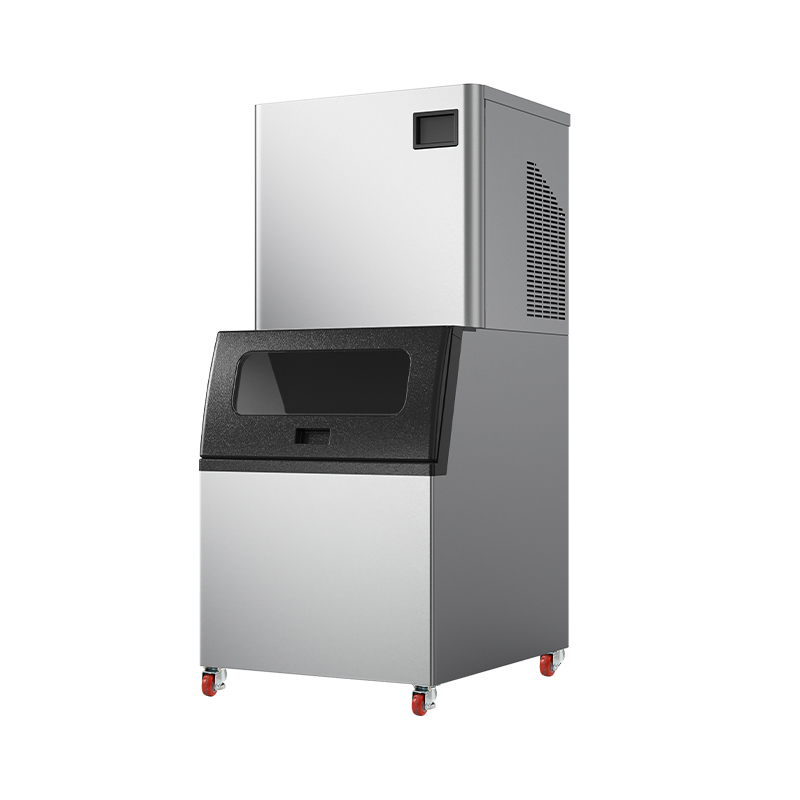
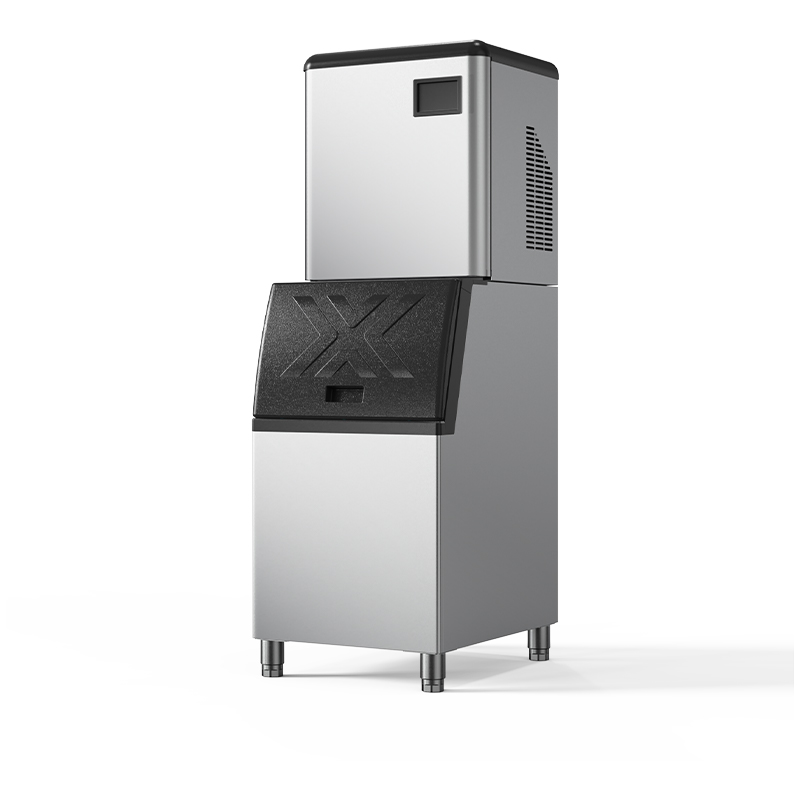
The ice maker head (production unit) and the storage bin are often sold separately in commercial configurations, allowing operators to match production capacity with the appropriate bin size for their service pattern. A high-volume operation that serves ice continuously throughout the day requires less bin storage relative to its production capacity; an operation that produces ice overnight for daytime service needs a larger bin to hold the full accumulated output.

Water Filtration Compatibility

Many commercial cube ice makers are designed to accept an inline water filtration system upstream of the water inlet valve. Specifying a unit with filter compatibility — and budgeting for filter replacement as part of the ongoing operating cost — is strongly recommended in regions with hard or chlorinated municipal water supplies. Filtered water extends service intervals, improves cube clarity and taste, and protects warranty coverage, as water quality damage is typically excluded from standard manufacturer warranties.

Summary: How to Use and Maintain a Cube Ice Maker Effectively

Using a cube ice maker effectively comes down to four consistent practices: proper initial setup, clean and filtered water, regular cleaning and descaling, and adequate ventilation. Install the machine in a well-ventilated location within its rated temperature range, use filtered water whenever feasible, perform a thorough interior cleaning every one to three months, and monitor the reservoir level and bin capacity as part of your daily routine.

For residential users, these habits are simple to build into a routine and will ensure years of trouble-free operation from a well-made machine. For commercial operators — food service businesses, hospitality venues, catering operations — the same principles apply at a higher standard of rigor: documented cleaning schedules, regular filter replacement, professional annual inspections, and informed cube size selection for each service application.

Whether you are sourcing a single countertop cube ice maker for a small office or specifying a fleet of high-capacity commercial units for a hotel chain, understanding how the machine works and what it requires to perform reliably is the foundation for a successful long-term investment. Clear, dense, consistent cube ice begins with the right operating habits — and this guide provides the complete framework to achieve exactly that.