

 English
  Español
 SMK-156 for High-Capacity Cube Ice Maker— A Commercial Flagship and Production Powerhouse
+ VIEW MORE
 Industry News
HOME / News & Share / Industry News / Commercial Cube Ice Maker: How to Choose the Right Machine for Your Business
Commercial Cube Ice Maker: How to Choose the Right Machine for Your Business
Sharmoon appreciates your support and sincerely looks forward to cooperating with you for mutual development!
Content
- 1 What Makes a Commercial Cube Ice Maker Different
- 2 Cube, Nugget or Flake: Matching the Ice to the Menu
- 3 Sizing the Machine With Real Numbers
- 4 Undercounter, Modular or Split-Type: Picking the Configuration
- 5 Air-Cooled or Water-Cooled Condenser?
- 6 Water Quality and the Maintenance Routine That Protects Output
- 7 A Buying Checklist Before You Sign
- 8 Where a Manufacturer Like Sharmoon Fits In
If the ice bin runs dry before last call on a Friday, the fault usually traces back to the purchase decision, not the machine on the night. A commercial cube ice maker earns its keep by producing hard, slow-melting cubes hour after hour in a hot room, and the units that disappoint in service were almost always sized from a nameplate instead of from real demand.
This guide covers what separates commercial machines from residential ones, how cube formats behave in a glass, how to convert seats and covers into daily kilograms, and which configuration—undercounter, modular or split-type—fits your floor plan. It closes with the pre-purchase checklist operators and equipment importers rely on.
The short version: estimate peak daily ice demand, add about 20% for growth, then confirm the machine still delivers that output at your room temperature and incoming water temperature—published ratings assume roughly 90°F (32°C) air and 70°F (21°C) water, and few kitchens stay that cool.
What Makes a Commercial Cube Ice Maker Different
A commercial unit is engineered around duty cycle rather than batch convenience. A residential countertop machine might manage a few dozen pounds a day in intermittent runs; a commercial machine harvests fully frozen cubes through long, continuous stretches of service. Three differences should shape how you compare quotations:
- Rating conditions. Published 24-hour capacities assume about 90°F (32°C) ambient air and 70°F (21°C) water. Push the room to 100°F (38°C) with warmer supply water and real output can drop by a quarter or more, so always ask what a model produces at your conditions.
- Ice hardness. Cube ice freezes solid, which is why a full cube of roughly 22 mm (7/8 in) rattles into a rocks glass, displaces spirit instead of diluting it, and outlasts softer formats in a busy well.
- Serviceability. Accessible food zones and cleanable condensers exist so a technician can descale and sanitize the machine without replacing it. Ice is treated as a food under hygiene standards such as NSF/ANSI 12.
Cube, Nugget or Flake: Matching the Ice to the Menu
Cube ice is the beverage default because it is dense and slow-melting, but the format deserves a conscious decision rather than a habit. The table below summarizes how the common commercial formats behave in service.
| Ice Format | Typical Form | Behavior in Service | Best Fit |
|---|---|---|---|
| Full cube | About 22 mm (7/8 in) solid cube | Slowest dilution; strong carbonation retention | Cocktails, spirits, premium soft drinks |
| Half cube | Same face, roughly half the thickness | Packs tighter; fills cups evenly | Fast-casual drinks, dispensers, blended service |
| Nugget | Compressed, chewable granules | Cools fast; soaks up flavor | Sodas, smoothies, healthcare dining |
| Flake | Soft, snow-like fragments | Molds around products; rapid chill | Seafood and produce display, bakeries |
A cocktail-led bar justifies full cubes on dilution control alone, while a café filling cup after cup of fountain soda often prefers half cubes for packing density. Nugget and flake ice run on different machine platforms entirely, which is why the ice decision should come before the equipment decision.
Sizing the Machine With Real Numbers
Start from demand, not from the catalog. Foodservice planners commonly work from these averages:
- Restaurants: about 1.5 lb (0.7 kg) of ice per customer served
- Cocktail bars: about 3 lb (1.4 kg) per seat per day
- Cafés: roughly 0.5–1 lb (0.2–0.5 kg) per iced beverage
- Hotels: about 5 lb (2.3 kg) per guest room
A worked example: a 60-seat cocktail bar needs roughly 60 × 3 lb = 180 lb (82 kg) on a peak day. Adding 20% for growth and menu changes sets a target of about 216 lb (98 kg) of in-the-room production. If the back bar regularly reaches 100°F and output falls by around a quarter at that temperature, the nameplate needs to read closer to 290 lb (132 kg) at standard conditions.
Then size storage. A bin holding roughly one-third to one-half of daily production lets the machine harvest through off-hours and refill before service, so a 250 lb machine paired with a 100–120 lb bin can comfortably carry a 180 lb day. Keeping production and storage close together also tightens the footprint, which matters in older buildings.
Undercounter, Modular or Split-Type: Picking the Configuration
Configuration determines installation cost and workflow before performance enters the conversation—match the layout to the venue rather than forcing the venue to adapt.
Undercounter and built-in machines
An undercounter unit slides beneath the counter and dispenses through its top, which suits a bar well, café station or food truck where the same person pulls ice and builds drinks. Built-in versions integrate flush with cabinetry for a clean front-of-house look. Measure the alcove before ordering: width, depth, door swing and top clearance for service access.
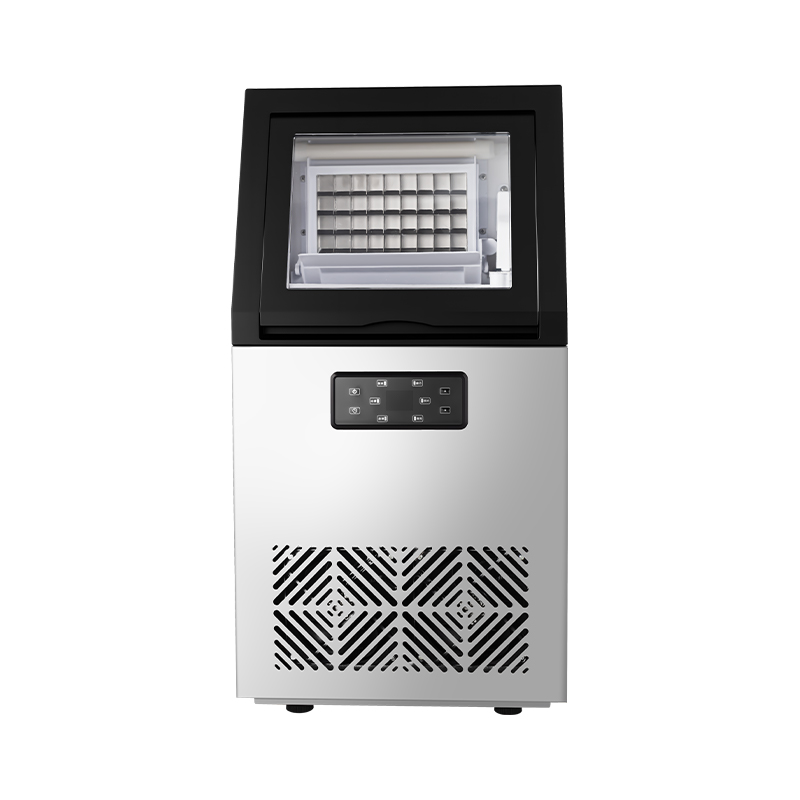 SMK-24F Full-Cube Undercounter Ice MakerThis compact 24 kg/day undercounter unit fits beneath a bar or café counter and dispenses from the top, with 5 kg storage and flexible water supply—ideal where one person pulls ice and builds drinks.View Product →
Modular machines with separate storage bins
A modular head unit sits on a dedicated bin and produces large daily volumes, and the pairing can change as the business grows: keep the bin and upgrade the head, or run additional heads alongside when summer demand doubles. This is the standard choice for hotel kitchens, banquet operations and high-volume quick-service restaurants.
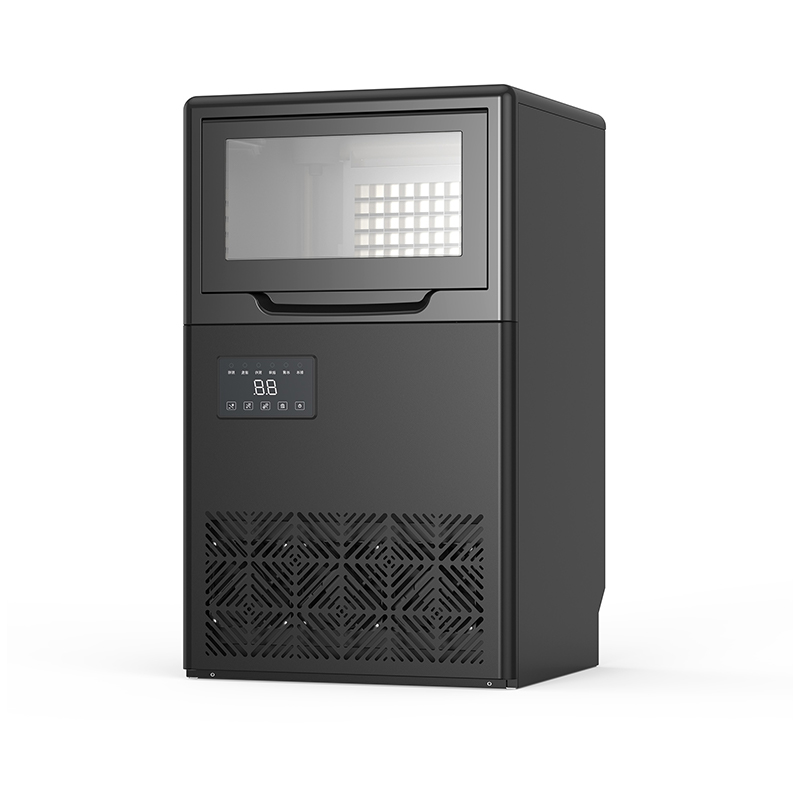 SMK-78F Modular Cube Ice MakerProducing 78 kg of clear cube ice daily with 25 kg of built-in storage, this unit matches the modular head-and-bin approach, letting hotels and banquet kitchens scale capacity as demand grows.View Product →
Split-type systems
Split-type machines separate the refrigeration system from the ice-making and storage section, moving compressor heat and most of the noise to a back room or rooftop. The layout suits packed dining rooms and hot climates, where every kilowatt of heat kept out of the serving area is a kilowatt the air conditioning does not have to fight.
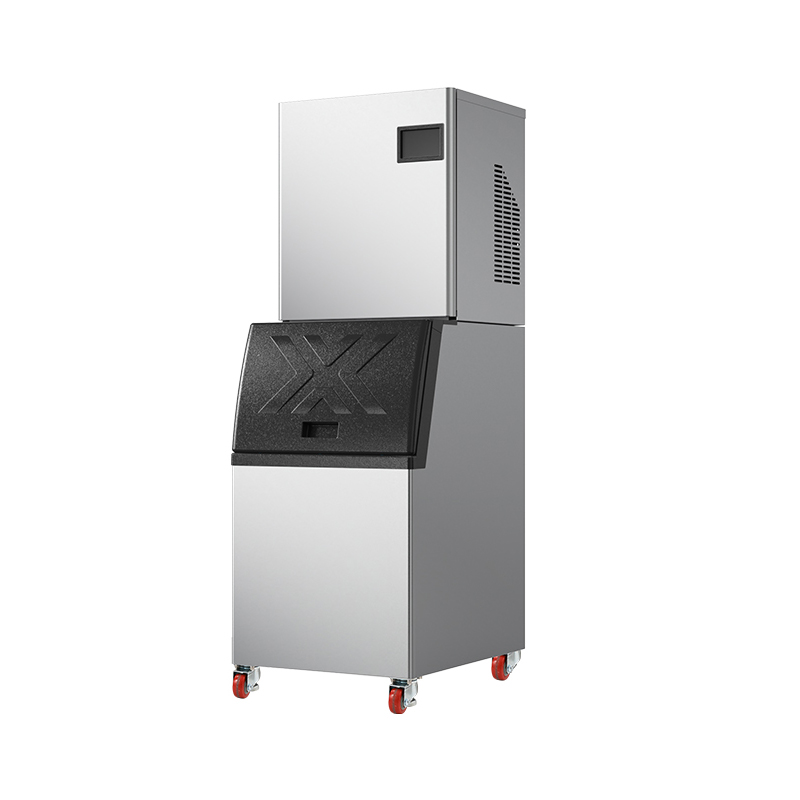 SMK-156 High-Capacity Split-Type Cube Ice MakerWith a split layout moving heat and noise to a back room and storage bins from 150 kg up, this high-capacity maker suits packed dining rooms and hot climates while keeping front-of-house quiet.View Product →
Air-Cooled or Water-Cooled Condenser?
For most buyers the utility bill settles this question before the spec sheet does.
- Air-cooled machines need only power, water and a drain, plus roughly 6 in (15 cm) of clearance at the air discharge. The trade-off is heat released into the room, so ventilation planning matters.
- Water-cooled machines run quieter and add less heat to the room, but they consume large volumes of potable water to reject condenser heat, which is why several municipalities restrict new installations.
Unless water is genuinely cheap at your site and ambient heat is intolerable, air-cooled is the rational default.
Water Quality and the Maintenance Routine That Protects Output
Ice is a food and the machine is food equipment; two habits decide whether a cube ice maker still meets its rated output in year five:
- Filter the water. Scale and sediment are the leading causes of falling production and service calls. Match filtration to local water hardness and replace cartridges on schedule—about every six months is a common interval, more often on hard supplies.
- Clean and sanitize the food zone. Plan a full cleaning and sanitizing cycle roughly every six months, or quarterly in hard-water areas and yeast-heavy environments such as bakery-adjacent bars, where scale and microbial growth accelerate.
- Keep the condenser breathing. In greasy kitchens, wash the air filter monthly and degrease the condenser coil about every 90 days; a choked condenser mimics every symptom of an undersized machine.
Setup, daily operation and the full cleaning sequence deserve their own walkthrough; our cube ice maker guide to setup, operation and cleaning covers the routine step by step.
A Buying Checklist Before You Sign
Run this list before comparing quotations; it takes an hour and prevents the most expensive mistakes.
- Peak daily demand recalculated at your real ambient and water temperatures, with about 20% headroom for growth
- Cube format and size—full or half—matched to your glassware and drink menu
- Electrical supply: confirm whether the model runs on 115V or requires a 208–230V circuit
- Drain planning: gravity drains need a continuous downhill run and a floor drain that actually sits below the outlet
- Clearance around the air discharge and a ventilation path for rejected heat
- A water hardness test, with filtration priced into the purchase rather than added after the first scale-related repair
- Bin capacity checked against your service pattern—overnight refill versus continuous pulls
- Supplier terms: warranty, spare parts, documentation, and OEM/ODM support for your market
Where a Manufacturer Like Sharmoon Fits In
For a brand owner, importer or kitchen-equipment distributor rather than a single-site operator, the question shifts from "which model" to "which manufacturing partner." Cixi City Sharmoon Electric Co., Ltd. has built water-related appliances since 2003—filter pitchers and tap filters first, commercial ice makers from 2016 onward—and treats the cube category as its core development line today, with models running from compact undercounter units to high-output modular and split-type platforms such as the SMK156 series.
That water-treatment background is more relevant than it first appears: water path design, filtration compatibility and hygiene are exactly where cube machines succeed or fail in daily service. The company positions itself as an OEM/ODM partner for global buyers, supported by automated production lines and a smart warehouse for order fulfillment.
Whichever supplier you choose, hold the deal to the numbers in this guide—rated output verified at your conditions, storage matched to your service pattern, and a maintenance plan agreed from day one. That is what separates a machine that survives the Friday rush from one that defines it.
Related Product
-
-
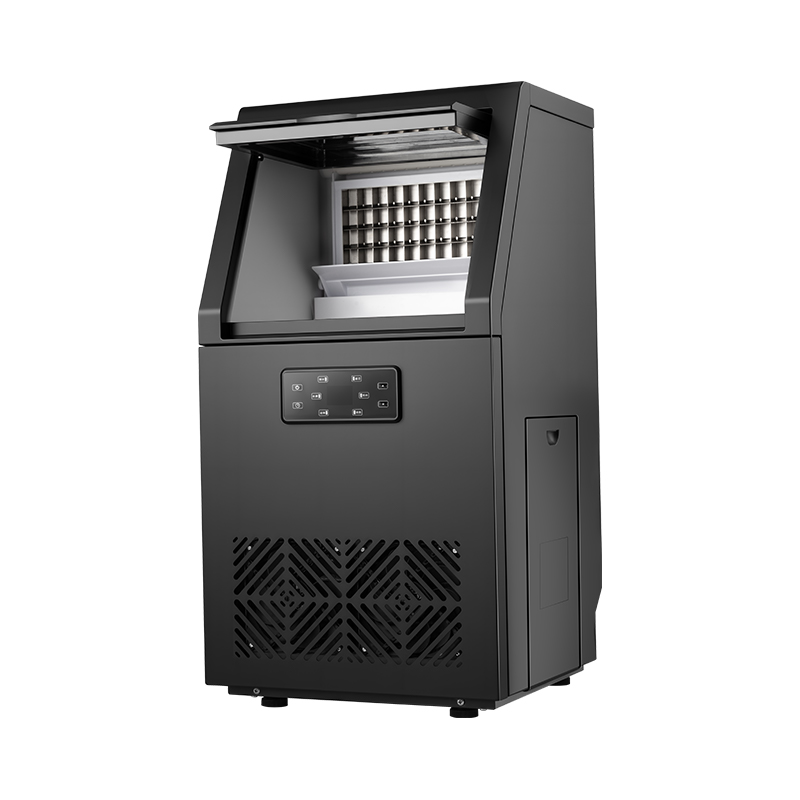
The SMK-24F Full-Cube Undercounter Ice Maker is a fully automated ice-making unit meticulously desig...
+ VIEW MORE -

The SMK-78F Modular Cube Ice Maker is a fully automated device engineered specifically for high-effi...
+ VIEW MORE -
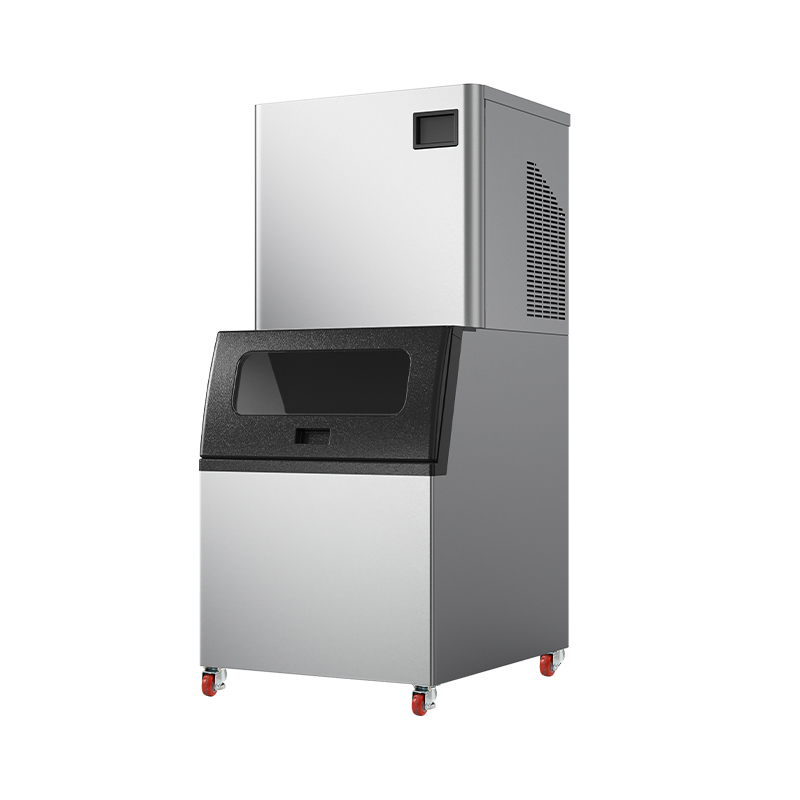
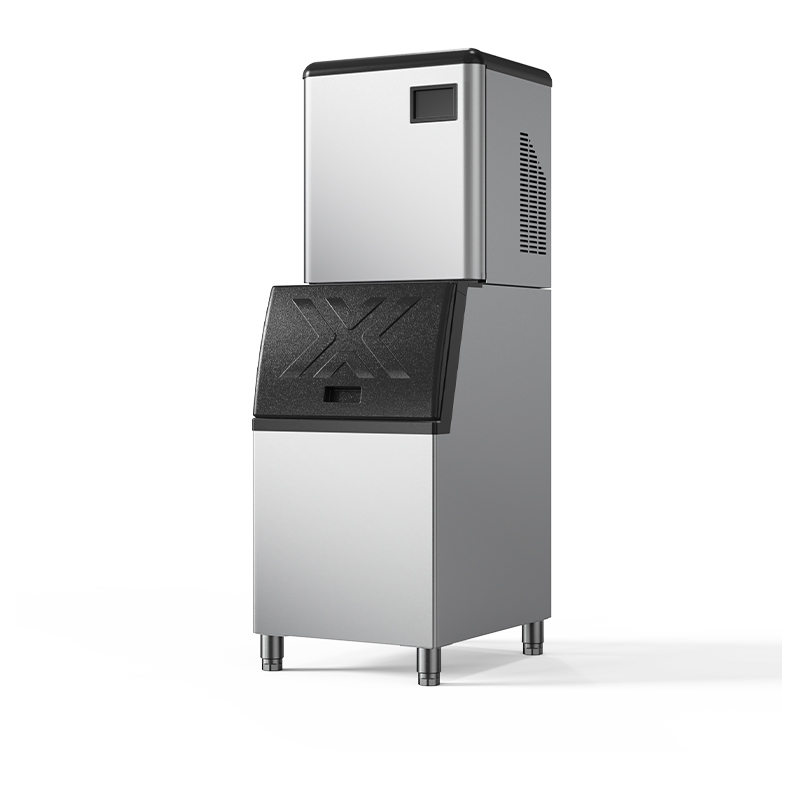
The SMK-260 FRO High-Yield Cube Ice Maker is a split-system ice machine specifically engineered for ...
+ VIEW MORE -
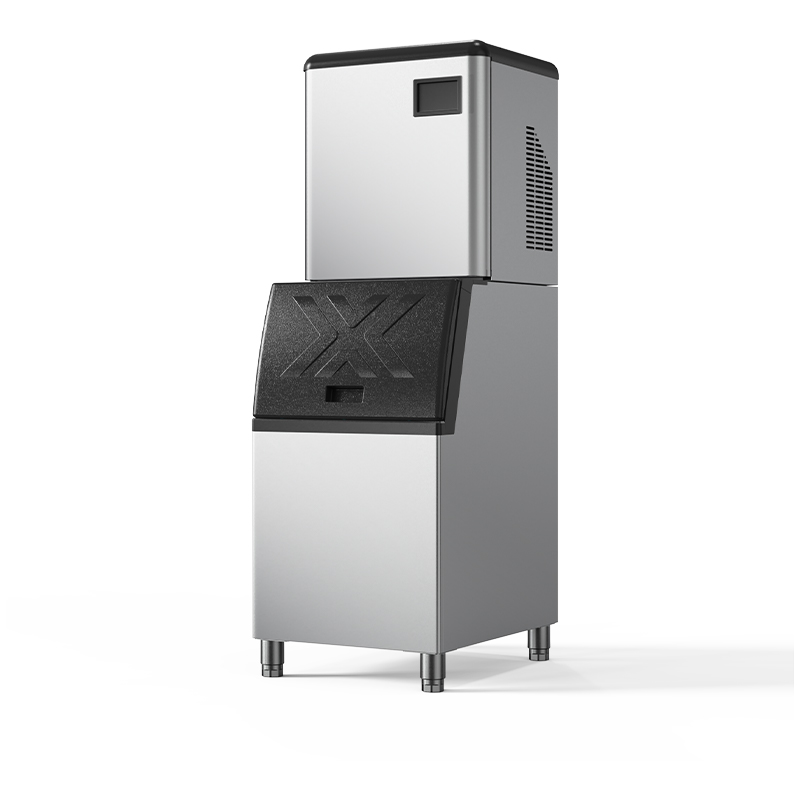
The SMK-182 FRO Stainless Steel Cube Ice Maker is a split-system square ice maker specifically engin...
+ VIEW MORE -
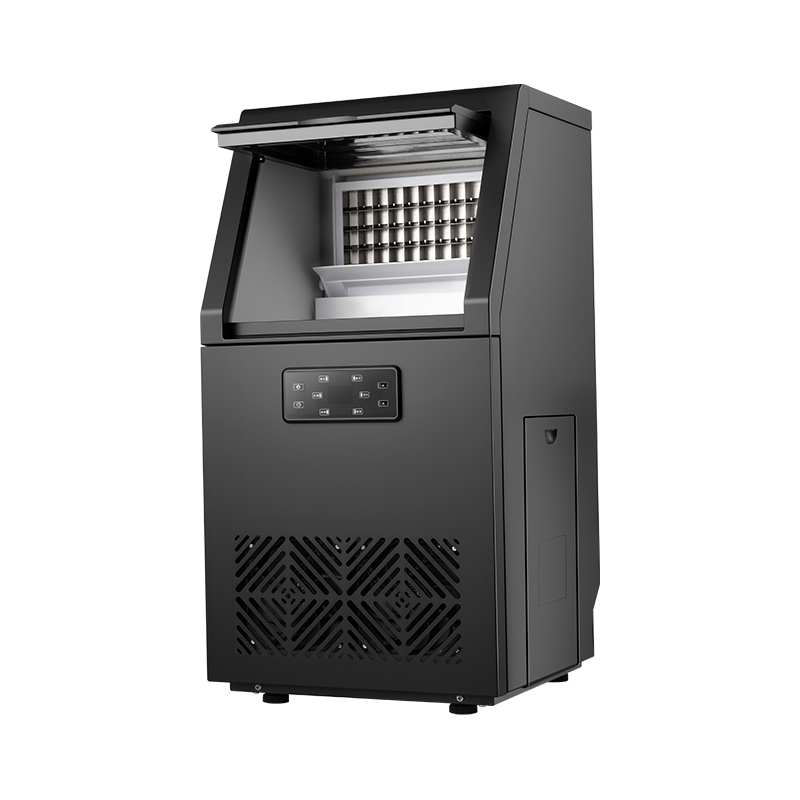
The SMK-32F Smart Integrated Commercial Ice Maker is a highly efficient ice-making device specifical...
+ VIEW MORE


Product Categories
Cube Ice Maker Flake Ice Maker Extruded Pellet Ice Maker Split Type Cube Ice Maker Snowflake Ice MakerContact
 [email protected]
 + 86 - 18158466171
 No. 6 Wei'er Road, Xigong District, Xinpu Town, Cixi City, Zhejiang Province, China
Copyright © Cixi City Sharmoon Electric Co., Ltd. All Rights Reserved
Custom commercial ice machine outdoor Manufacturer
OEM/ODM commercial ice machine company
