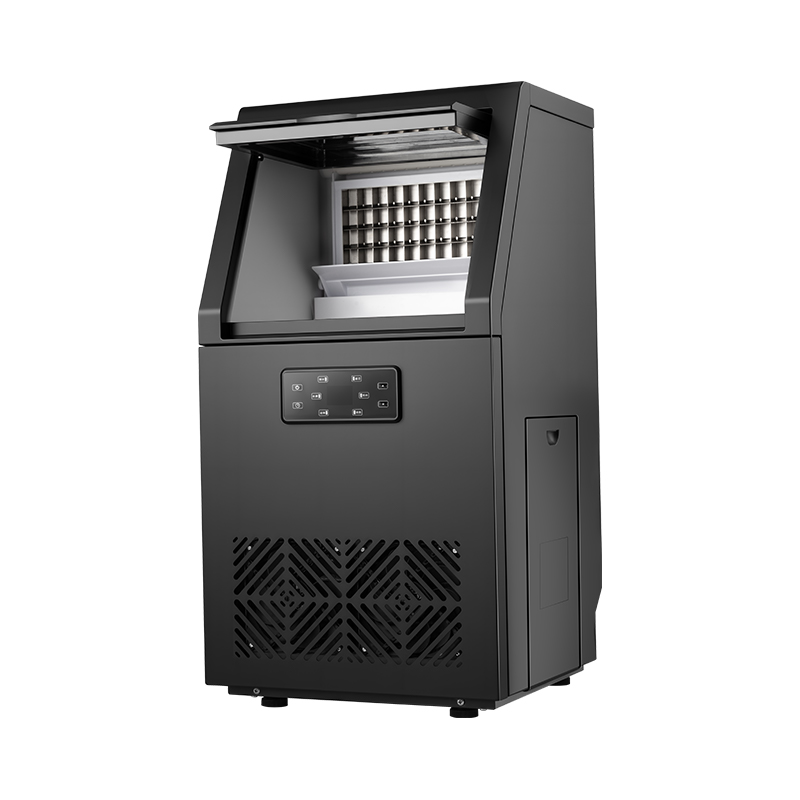
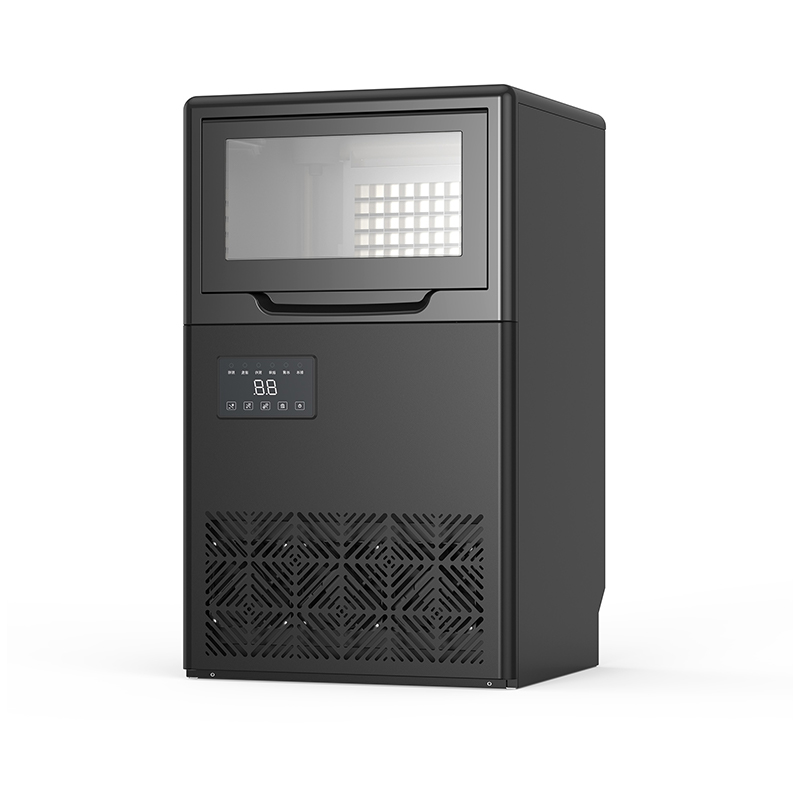
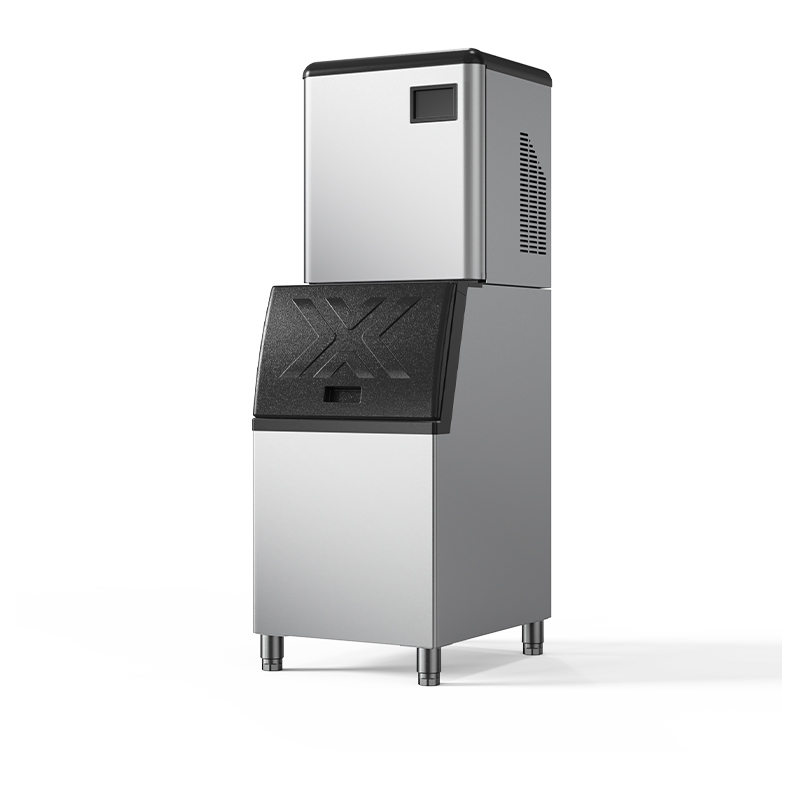
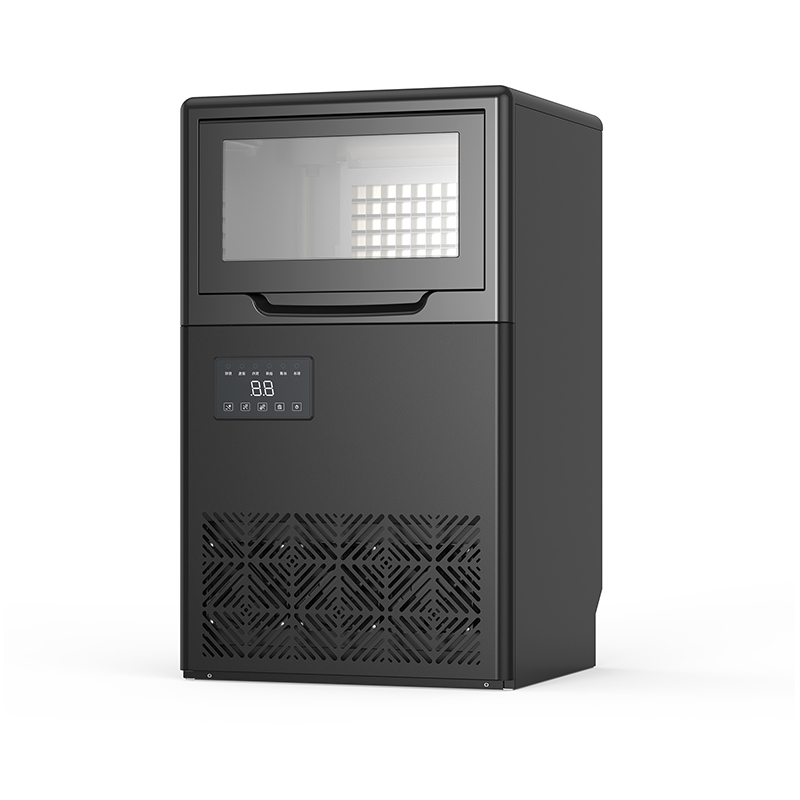
The SMK-24F Full-Cube Undercounter Ice Maker is a fully automated ice-making unit meticulously desig...
+ VIEW MORE

Industry News
Sharmoon appreciates your support and sincerely looks forward to cooperating with you for mutual development!
Cube ice is made by circulating chilled water over metal evaporator plates or cells inside an ice maker machine until the water freezes into individual cube shapes, after which a brief warming or reversing cycle releases the cubes into a storage bin. The entire process runs on a repeating cycle — freeze, harvest, refill — controlled automatically by the machine's refrigeration system and electronic timer. A well-designed ice maker machine completes this cycle in as little as 8 to 20 minutes, depending on the model, water temperature, and target cube size.
Unlike ice trays in a home freezer, which freeze water from the outside in and take hours, a commercial or semi-commercial ice maker machine forces continuous water flow across a freezing surface, which produces clearer, denser cubes in a fraction of the time. This distinction matters for any business or facility deciding between a basic freezer tray solution and dedicated ice-making equipment.
While designs vary between bullet, flake, and full cube machines, most cube ice maker machines follow the same core sequence. Understanding each stage helps explain why certain machines produce clearer ice, and why others are faster but slightly less clear.
Water enters the machine through a supply line, often passing through a filter first. Filtration removes sediment and some dissolved minerals that would otherwise cause cloudy or brittle ice, which is why filtered water consistently produces clearer cubes than unfiltered tap water.
A pump continuously sprays or flows water over refrigerated evaporator plates, cells, or grids. This constant motion is the key difference from static ice trays — moving water freezes in thin, even layers, pushing trapped air and minerals to the last-frozen center rather than locking them throughout the cube.
The water freezes gradually in thin layers as it passes over the cold surface repeatedly. This layering effect is what gives commercially made cube ice its characteristic clarity, compared to the cloudy appearance of ice frozen all at once in a sealed tray.
Once the cubes reach the target thickness, the machine briefly reverses the refrigeration cycle or applies a short burst of warm gas to the back of the freezing surface. This loosens the ice just enough for it to release and drop into the storage bin below.
The system immediately refills with fresh water and restarts the freezing cycle. This is why an ice maker machine can run continuously for hours, producing cube after cube, as long as the storage bin has capacity remaining.
Not every machine produces the same cube in the same amount of time. Several variables determine how clear, how hard, and how quickly cube ice forms.
Together, these factors explain why two machines with the same rated daily capacity can perform differently once installed in different environments.
Cube ice is only one of several shapes an ice maker machine can produce. Choosing the right type depends on the intended use, whether that is beverage service, food display, or medical and industrial cooling.
| Ice Type | Typical Melt Rate | Best Suited For |
|---|---|---|
| Full Cube | Slow | Bars, restaurants, retail beverage sales |
| Half Cube | Moderate | Fast-turnover drink service, fountain machines |
| Flake Ice | Fast | Seafood display, food processing, medical cooling |
| Bullet Ice | Moderate | Countertop dispensers, chewable-ice preference |
Selecting an ice maker machine for cube production should start with actual daily ice demand rather than the largest available model. Oversized machines waste energy running below capacity, while undersized machines struggle during peak demand and shorten compressor lifespan through constant strain.
Because scale buildup and airflow restriction are the two most common causes of declining ice output, routine maintenance protects both cube clarity and machine lifespan.
Continuous water circulation during freezing pushes air and minerals to the last part of the cube to freeze, while static freezing in a tray traps them evenly throughout, producing a cloudier result.
Not automatically. A longer cycle usually means a thicker, slower-melting cube, but beyond a certain point it simply reduces daily output without improving clarity if the water and filtration quality remain the same.
Yes. Untreated hard water gradually deposits scale on the freezing surface and in the water lines, which is why routine cleaning and, in some cases, a water softener are recommended in high-mineral-content areas.
Understanding how cube ice is made is useful, but matching that knowledge to the right equipment matters just as much. A dedicated ice maker machine manufacturer can help translate daily ice volume needs, water conditions, and installation space into a specific model recommendation rather than a generic capacity number. Manufacturers who focus specifically on ice-making equipment typically offer a range of cube, flake, and bullet ice configurations, along with air-cooled and water-cooled options suited to different climates and facility types.
For businesses evaluating new equipment, it is worth requesting details on water consumption per cycle, expected maintenance intervals, and warranty coverage for the compressor and freezing assembly, since these factors influence total cost of ownership far more than the listed daily ice capacity alone. A manufacturer with OEM and ODM production experience can also support customization for specific bin sizes, cube shapes, or installation constraints, which is particularly useful for businesses with non-standard kitchen or facility layouts.
The SMK-24F Full-Cube Undercounter Ice Maker is a fully automated ice-making unit meticulously desig...
+ VIEW MORE
The SMK-78F Modular Cube Ice Maker is a fully automated device engineered specifically for high-effi...
+ VIEW MORE
The SMK-260 FRO High-Yield Cube Ice Maker is a split-system ice machine specifically engineered for ...
+ VIEW MORE
The SMK-182 FRO Stainless Steel Cube Ice Maker is a split-system square ice maker specifically engin...
+ VIEW MORE
SMK-156 for High-Capacity Cube Ice Maker— A Commercial Flagship and Production Powerhouse
+ VIEW MORE
The SMK-84F High-Capacity Cube Ice Machine is an industrial-grade ice-making solution specifically e...
+ VIEW MORESend us your requirements and we will reply within 24 hours.

Product Categories
Cube Ice Maker Flake Ice Maker Extruded Pellet Ice Maker Split Type Cube Ice Maker Snowflake Ice MakerContact
[email protected]
+ 86 - 18158466171
No. 6 Wei'er Road, Xigong District, Xinpu Town, Cixi City, Zhejiang Province, China
English
Español