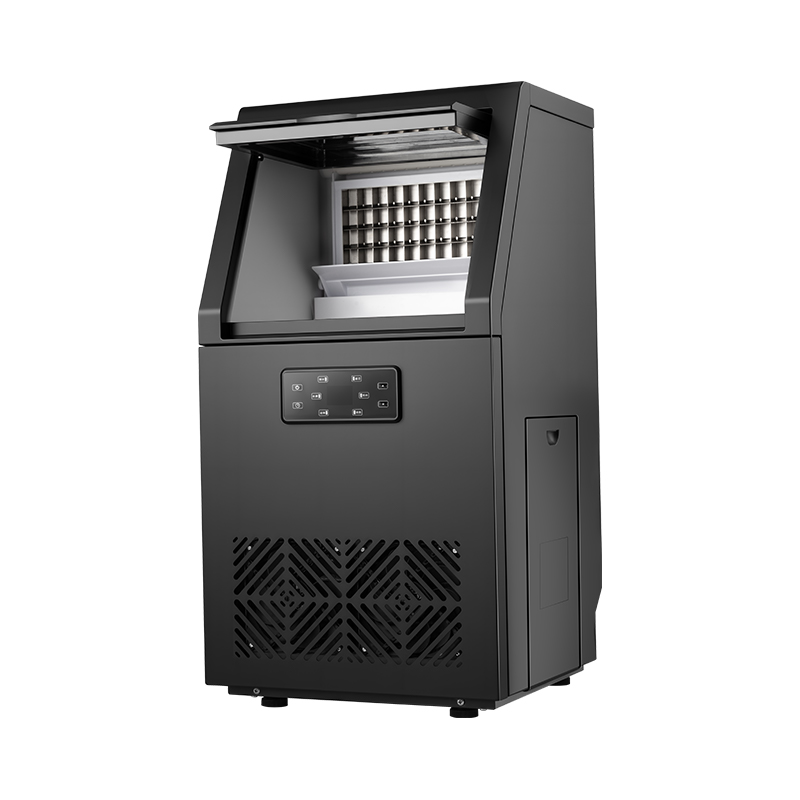
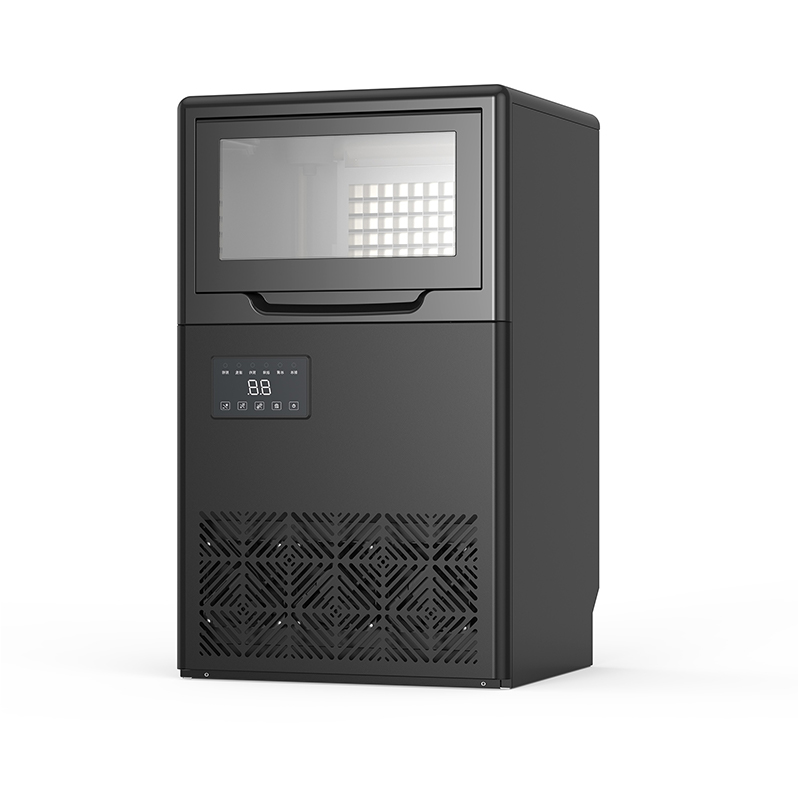
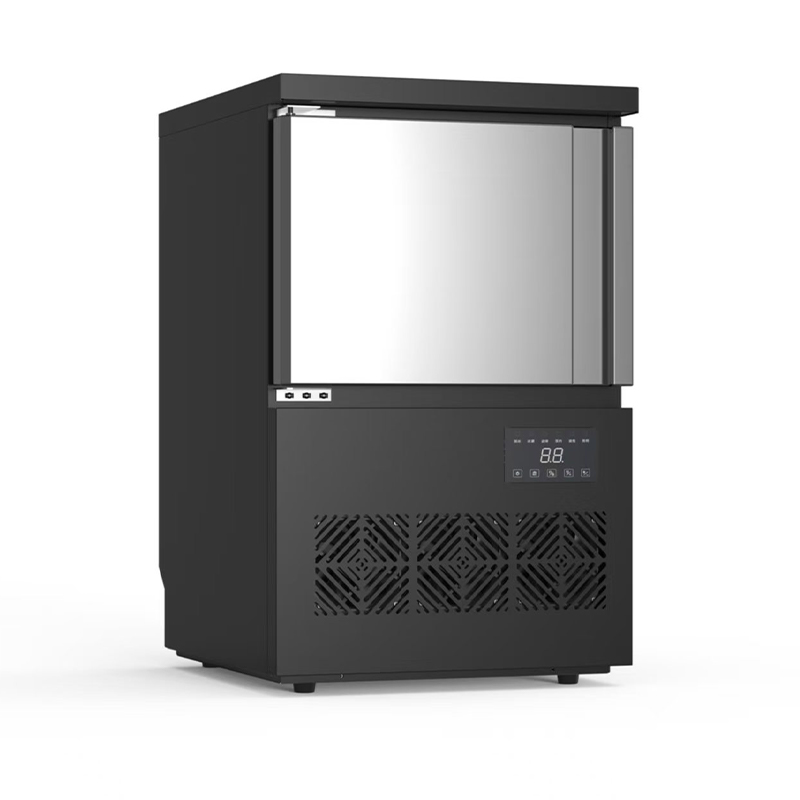
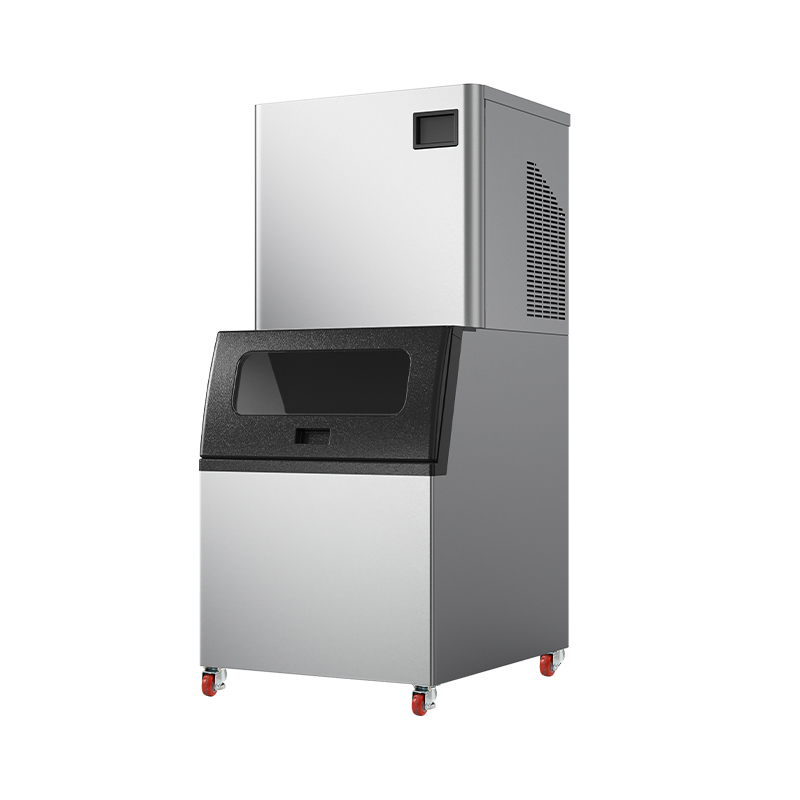
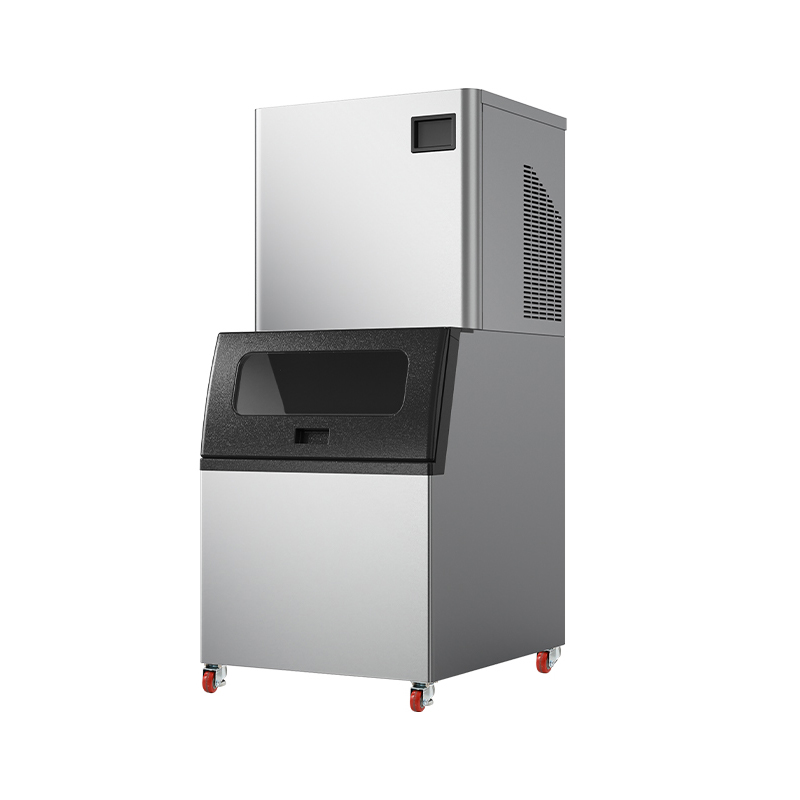
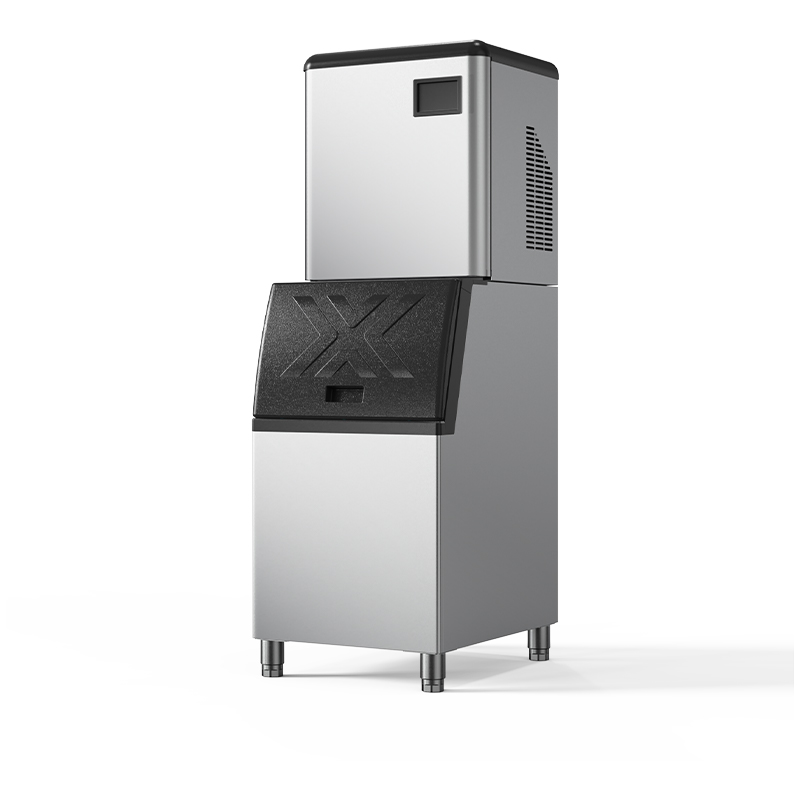
The SMK-24F Full-Cube Undercounter Ice Maker is a fully automated ice-making unit meticulously desig...
+ VIEW MORE

Industry News
Sharmoon appreciates your support and sincerely looks forward to cooperating with you for mutual development!
Nugget ice and snowflake ice are both soft, chewable ice forms, but they differ fundamentally in shape, texture, water content, and the applications they are best suited for. Nugget ice consists of small, cylindrical or pillow-shaped pellets — typically 8 to 12 mm across — that are extruded through a die, giving them a firm but compressible bite and a porous structure that readily absorbs beverage flavors. Snowflake ice is a completely different product: ultra-fine, dry ice crystals of just 1 to 2 mm produced by milling or high-speed cutting, resulting in a powder-like texture that resembles freshly fallen snow. Both are produced by specialized ice-making machines, but a snowflake ice maker and a nugget ice maker operate on different mechanical principles and serve meaningfully different commercial applications.
Understanding the differences between these two ice types helps food service operators, medical facility managers, laboratory procurement teams, and commercial ice equipment buyers make the right equipment decision for their specific use case. The sections below explain each ice type in detail, compare their physical properties side by side, and map both types to the applications where they deliver the best performance.
Nugget ice — also called pellet ice, pebble ice, or extruded ice — is produced by an auger-based extrusion mechanism. Water is frozen onto a refrigerated auger or cylinder surface, then the auger continuously scrapes the ice and pushes it through a die or compression head. The die shapes the compressed ice into small, roughly cylindrical nuggets before they are discharged into the storage bin. The compression process creates ice with a layered, slightly porous internal structure — air is trapped within the nugget during the extrusion stage — giving it a chewable, soft-but-firm texture that many people find distinctly satisfying compared to dense cube ice.
A typical nugget measures approximately 8 to 12 mm in length and 8 to 10 mm in diameter. Its water content is relatively low — around 10 to 15% — because the extrusion compression squeezes out much of the free moisture before discharge. This lower surface moisture gives nugget ice a slightly drier feel than flake ice but a noticeably wetter, more absorbent texture compared to solid cube ice. The porous structure means nugget ice rapidly absorbs the flavor of whatever liquid it is immersed in, which is why it became popular first in soft-drink fountain service and healthcare settings before spreading to specialty coffee and cocktail bars.
Discharge temperature for nugget ice from a commercial extruded pellet ice maker typically falls between -3°C and -6°C, making the ice cold enough to chill beverages quickly but not so cold that it causes immediate surface fogging on a glass or discomfort when chewed directly.
Snowflake ice is produced by a fundamentally different mechanism. In a commercial snowflake ice maker, water is distributed over a refrigerated drum or evaporator surface and rapidly frozen into a thin ice sheet. A high-speed rotating cutter, milling drum, or scraping blade then breaks this ice sheet into extremely fine particles — typically 1 to 2 mm in size — before they are discharged. The result is a dry, free-flowing ice with a powder-like consistency that visually resembles freshly fallen snow, which is where the name originates.
The water content of snowflake ice typically ranges from 15% to 25%, higher than nugget ice, which contributes to its ability to conform and pack tightly around irregular surfaces. Despite this higher moisture content, the ice feels dry to the touch because the moisture is distributed evenly within each fine particle rather than present as free surface water. Discharge temperature generally falls between -4°C and -8°C, with premium snowflake ice makers producing drier, colder output at the lower end of this range.
The exceptionally high surface-area-to-mass ratio of snowflake ice — a consequence of the 1–2 mm particle size — is its defining functional characteristic. More surface area means faster, more uniform heat transfer to the material in contact with the ice, making snowflake ice the optimal choice for applications where rapid, even temperature reduction is the primary goal rather than the chilling of a beverage in a glass.
The table below summarizes the key differences between nugget ice and snowflake ice across the physical, operational, and application parameters most relevant to commercial buyers and end users.
| Property | Nugget Ice | Snowflake Ice |
|---|---|---|
| Production method | Auger extrusion through a die | Drum freezing + high-speed milling / cutting |
| Particle size | 8–12 mm | 1–2 mm |
| Shape | Cylindrical / pillow-shaped pellets | Irregular fine crystals, powder-like |
| Water content | ~10–15% | ~15–25% |
| Discharge temperature | -3°C to -6°C | -4°C to -8°C |
| Texture / mouthfeel | Soft, chewable, porous, compressible | Extremely fine, dry, smooth, snow-like |
| Surface area per unit | Moderate | Very high (maximized heat transfer) |
| Flavor absorption | High — porous structure absorbs liquid | Very high — fine particles integrate with syrup / liquid |
| Melt rate | Moderate — slower than snowflake | Faster — large surface area absorbs ambient heat quickly |
| Surface conformability | Good — packs around surfaces | Excellent — penetrates narrow gaps, surrounds irregular shapes |
| Primary applications | Beverages, fountain drinks, healthcare | Desserts, lab/medical, seafood display, food processing |
Nugget ice's combination of soft texture, defined pellet shape, and flavor-absorbing porosity makes it the preferred ice form for applications centered on beverage service and patient care.
Nugget ice became widely adopted in quick-service restaurants and convenience stores specifically because the porous pellet absorbs the flavor of the soda or beverage it is immersed in. A cup of nugget ice in a fountain drink effectively becomes a flavorful, chewable extension of the drink rather than a neutral diluting element. This characteristic drives repeat customer preference at outlets serving nugget ice — a documented phenomenon that has made nugget ice a competitive differentiator in the fountain beverage sector.
The soft, chewable texture of nugget ice translates well to specialty beverage service where customers engage directly with the ice as part of the drink experience. In iced coffee, iced matcha, cocktails served on the rocks, and blended beverages, nugget ice provides rapid initial chilling, a visually appealing fill in transparent cups, and a texture that is easy to blend without damaging equipment. The relatively slower melt rate compared to snowflake ice makes nugget ice better suited to beverages that will be consumed over 15 to 30 minutes.
Nugget ice has a strong presence in hospitals, rehabilitation centers, and long-term care facilities because its soft, chewable form is safe for patients with swallowing difficulties, post-surgical recovery needs, or dry mouth conditions. Many patients find nugget ice more comfortable and appealing to consume than hard cube ice, which encourages hydration — an important clinical outcome in patient care settings. Its defined pellet shape also makes it easy to measure, portion, and handle in clinical environments without the mess associated with finer ice forms.
Snowflake ice's ultra-fine particle size, high surface area, and ability to conform tightly to any shape make it irreplaceable in applications where maximum surface contact cooling, aesthetic presentation, or rapid temperature transfer are the governing requirements.
Snowflake ice is the defining ingredient in Korean bingsu, Taiwanese snow milk ice, and similar shaved-ice dessert formats where the ice itself is the primary textural element of the dish. The 1–2 mm particles create a soft, fluffy mound that absorbs flavored syrups, condensed milk, fruit purées, and toppings evenly throughout its volume — rather than leaving toppings sitting on a hard ice surface as cube-shaved ice would. When a customer eats a spoonful of well-made bingsu, the ice melts almost immediately on the tongue, delivering the flavored liquid component in the same instant. This instant-melt quality is only achievable with true snowflake ice; nugget ice is too large and firm to replicate it.
Snowflake ice's ability to fill narrow gaps and surround irregular shapes makes it significantly more effective than nugget ice for chilled food display. A whole fish placed on snowflake ice has ice in contact with virtually every part of its surface, including the gill cavity, belly, and tail fins. The same fish on nugget ice sits on a layer of pellets with significant air gaps between the ice and the product surface, reducing cooling efficiency. For commercial seafood counters, buffet displays, and premium food markets, snowflake ice maintains display temperatures more reliably and creates a visually uniform, premium-looking presentation bed.
In research laboratories and clinical settings, snowflake ice is used to maintain reagent trays, PCR tubes, tissue samples, and specimen containers at near-zero temperatures during bench work. The fine, powder-like consistency allows snowflake ice to fill completely around small containers of any shape — round microcentrifuge tubes, rectangular sample trays, irregular specimen bottles — with uniform contact on all sides. This uniform contact is critical for applications requiring precise temperature maintenance; uneven contact with larger ice forms creates temperature gradients that can affect experimental outcomes or sample integrity. Nugget ice, with its defined pellet shape and larger size, leaves air gaps around small containers that snowflake ice eliminates.
In food processing facilities, snowflake ice is used to rapidly cool meat, poultry, fish, and produce either during processing or in the final stages before packaging. Because the fine particles maximize surface contact with the food product, the cooling rate is faster and more uniform than with larger ice forms. This is particularly important in meat processing where the time the product spends in the temperature danger zone (above 4°C) must be minimized to comply with food safety regulations. Large commercial snowflake ice makers with production capacities of several hundred kilograms per day are standard equipment in these environments.
Because the two ice types are produced by fundamentally different mechanisms, the machines that make them have distinct designs, maintenance requirements, and capacity profiles.
| Machine Feature | Extruded Pellet (Nugget) Ice Maker | Snowflake Ice Maker |
|---|---|---|
| Ice formation mechanism | Auger scrapes ice and extrudes through die | Drum freezing + high-speed cutter/milling drum |
| Key wear component | Auger and extrusion die | Cutter blade or milling drum |
| Typical commercial capacity range | 30–500 kg/day | 20–1,000+ kg/day |
| Ice output temperature | -3°C to -6°C | -4°C to -8°C |
| Primary use environment | Beverage service, food service counters, healthcare | Dessert shops, labs, seafood display, food processing |
| Machine format | Countertop, undercounter, modular | Countertop, standalone floor unit, industrial |
A commercial snowflake ice maker uses an efficient refrigeration cycle paired with a high-speed ice cutting or milling mechanism. Modern units are equipped with microcomputer control systems that automate the water supply, ice production, and harvesting stages, and include protection functions such as ice-full detection, water shortage alerts, and automatic restart after bin clearance. The blade or milling drum is the highest-wear component in a snowflake ice maker; blade replacement interval depends on the specific alloy and design, but well-engineered commercial units are designed for blade access and replacement as part of routine maintenance rather than requiring a full machine service call.
In most applications, the answer is no — these two ice types are not interchangeable, and substituting one for the other typically produces a noticeably inferior result.
There are some overlapping applications where either type performs adequately — general food display, broad food service cooling, and short-term product chilling can be accomplished with either — but for applications where ice type is a defining quality factor, specifying the correct ice maker from the outset is the right decision.
For buyers evaluating which type of commercial ice maker to source, the following questions provide a practical decision framework.
Nugget ice and snowflake ice are both soft ice forms valued for their texture and cooling efficiency, but they are engineered for different end uses and are produced by machines that operate on different principles. Nugget ice — with its 8–12 mm pellet shape, porous structure, and chewable texture — is the ice of choice for beverages, healthcare hydration, and applications where a defined, handleable ice form is needed. Snowflake ice — with its 1–2 mm particles, powder-like consistency, and exceptional surface contact performance — is indispensable for shaved-ice desserts, laboratory and pharmaceutical cooling, seafood display, and food processing applications where maximum and uniform surface coverage is the priority.
When sourcing commercial ice equipment, matching the ice type to the application — and then selecting a machine with the appropriate daily production capacity, discharge temperature, hygienic construction standards, and control automation for your operating environment — is the foundation of a reliable, cost-effective ice supply. For operations centered on dessert service, laboratory use, or food processing where snowflake ice is the correct specification, a purpose-built commercial snowflake ice maker delivers the particle size consistency and production reliability that general-purpose flake or pellet machines cannot replicate.
The SMK-24F Full-Cube Undercounter Ice Maker is a fully automated ice-making unit meticulously desig...
+ VIEW MORE
The SMK-91F Heavy-Duty Square Ice Machine is an industrial-grade ice-making solution specifically en...
+ VIEW MORE
The Spray Cubic Ice Machine is a commercial ice-making equipment that uses spray ice-making technolo...
+ VIEW MORE
The SMK-260 FRO High-Yield Cube Ice Maker is a split-system ice machine specifically engineered for ...
+ VIEW MORE
The SMK-234 FRO Electric CUBE ICE MAKER is an industrial-grade ice-making solution specifically engi...
+ VIEW MORE
The SMK-182 FRO Stainless Steel Cube Ice Maker is a split-system square ice maker specifically engin...
+ VIEW MORESend us your requirements and we will reply within 24 hours.

Product Categories
Cube Ice Maker Flake Ice Maker Extruded Pellet Ice Maker Split Type Cube Ice Maker Snowflake Ice MakerContact
[email protected]
+ 86 - 18158466171
No. 6 Wei'er Road, Xigong District, Xinpu Town, Cixi City, Zhejiang Province, China
English
Español